I’m an independent journalist and author with an uncertain road ahead. To support my writing, please consider a paid subscription to my Patreon page, or you can Venmo me directly, @rothschildmd. Thank you so much!
If you live in Pasadena, the time around New Years Day is one of the highlights of the year. A few days after Christmas, fans from two different out of-town college football powerhouses come into the Pasadena area for the game on January 1st (or the 2nd, if the 1st is a Sunday), along with tens of thousands of families who are staking out claims to watch the Rose Parade. From Christmas to New Years, the town seems to be taken over by folks in matching sweatshirts, RV’s finding space anywhere they can, the ubiquitous white Tournament of Roses cars, bleachers going up on Colorado Boulevard, and the sense that something special and unique is about to happen.
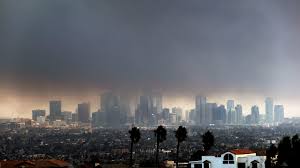
Now picture something like that, something that you can just feel in the air and see on the faces of everyone around you, people from out of town and natives alike – except it’s the worst possible thing you can imagine. It’s not a parade and a football game, but devastation and trauma and dislocation and fear. A city once famous for celebrating the new year and for its mansions and contributions to science is now a literal and figurative dark cloud. Pain hangs in the air like stale smoke and sadness.
The Eaton Fire devastated over 9,400 structures and killed 17 people in Altadena. But it has done far more than cause considerable physical damage. The mental weight is enormous and crushing for Pasadena, the city that sits just south – and at times intertwines with Altadena to the point where one side of the street is Altadena and other side of the street is Pasadena. People are almost paralyzed with grief and uncertainty. If there’s a parade, it’s one of utility trucks and lime green ServPro cleaning vehicles and bulldozers. And if there’s a football game, nobody is paying attention.
Every trip out to run basic errands, procure replacements for lost items, or just get something to eat reveals countless other people going through their own personal version of the disaster. And every single person’s experience is a little bit different, but also the same.
This week, we went out to start building the rudiments of a new life while attempting to wrap up the old one, and found no escape from our unwanted reality. At lunch, the gentlemen on one side of us had clearly come from across the country to help deal with the emergency, while the women on the other side were comparing their losses. The restaurant, like every other restaurant around Pasadena’s busy shopping nexus, seemed quiet and half-empty.
The grief was at the mattress store where the man in front of us, who had been sleeping in his car, needed to replace a pillow that had absorbed too much soot and ash to be safe. At Macy’s, we wandered around in a daze, looking at various things without the ability to decide on which of them we needed, or what we had originally owned. Once something is gone, it’s hard to remember what it was. You never thought about it. It was just there. What brand of comforter do you own? Do you even remember buying it?
It’s everywhere and in everything. A woman was on the phone in Macy’s talking clearly about her burned out house and organizing a rally devoted to not selling land to developers, while another woman outside Macy’s was on her own phone clearly saying “my house burned down on the 8th.” Hey, my house burned down on the 8th too! We’re house burning down besties!
The jeweler’s house burned down. The bakery owner’s house burned down. The preschool director’s house burned down, along with the preschool. The church where we got married wasn’t burned out, but dozens of its parishioners were. And the synagogue where I once went to Yom Kippur service is a charred husk.
Even those who still have houses are living with brutal uncertainty, particularly in hard-hit neighborhoods like mine. Imagine still actually having a home and all your stuff, but simultaneously needing to rent an apartment and buy everything you already own because you have absolutely no idea when you’ll be able to go back. Or if what you have is safe. Or if the water and power on your block will ever go back on. The financial toll is enormous, and the uncertainty is crushing. What’s worse, having no home or needing two?
If you want an inkling of how traumatized Pasadena is due to the fire, hang out at the Post Office. Altadena used to have a post office, but along with the pizza place and thrift shop next to it, the post office is gone. To get your mail, you go to the main Pasadena post office, where you’re sent to a table outside to give them your address. Then you stand there and wait, as address after address is called out. The street names are familiar because they’re the ones that have been hit the hardest – a mail call where the soldiers whose names are called are already gone. There were several on my street, and many more on the streets just around me. It was deeply depressing, and also, there was no shade and sitting on a curb hurts because I’d been sleeping on an air mattress for days.
Some people have no mail. Some people have a mail carrier who’s out on their route, so they get to do it all over again. And some folks can’t get their mail since they lack the proper ID, like the woman in front of me who was picking up the mail for her business owner husband, but wasn’t actually him. Very few people are talking, and those who are talking are simply comparing what they’ve lost and who else they know that was burned out. What else would you talk about?
A thick haze of grief has settled over Pasadena. Maybe over all of LA, given the magnitude of the Palisades fire as well. I haven’t talked much about it given that it’s outside of my experience, but if it’s anything like Eaton, all of the westside is stumbling around in a daze, trying to figure out who they know that doesn’t have a home anymore. The air reminds you of it. The seemingly constant din of sirens reminds you. We got an Amber Alert on our phones and collectively crapped ourselves as a community. This is not sustainable or healthy.
Where does all this trauma go? How do we get back to living something resembling the lives we used to have before this? When can we just hang out with friends and do stuff with our kids and catch a ballgame without playing wildfire bingo with our losses? Forget about asking when our debris will be cleared (6 months? A year? 18 months?) or when we’ll have new homes (two years? Three years? TBD??)
Maybe it’s time to ask when we’ll stop walking around like we’ve got lead weights on our feet. It’s hard to imagine it will be anytime soon.
 Mike Rothschild