Eaton Fire #16: Six Months Out

The Eaton Fire was six months ago today, and we’re still in the early stages of rebuilding our home and replacing the decades’ worth of things we lost. If you can help at all, a subscription on Patreon would be greatly appreciated. I promise to post more exclusive content on there once I get a little more settled in a new work routine. Thank you!


Nobody can prepare you for when disaster personally strikes you. You can read up on disaster prep, you can stockpile canned goods and batteries, you can even write down your plans and practice what you’ll do and where you’ll go. But if it happens, a lot of that won’t matter. Certainly the canned goods, batteries, and cash we had did us little good as our house went up in flames. It became just more stuff to melt and clean up.

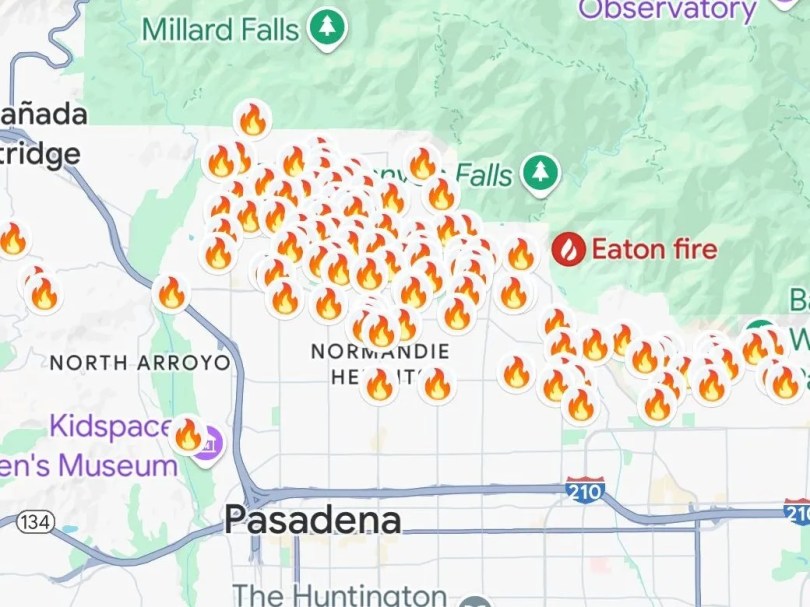
We are six months out from the Eaton Fire burning down our house, our possessions, our neighborhood, much of our town, and many of the businesses and places we went to.

How are we doing, you ask?

The short answer is…*shrug*

The longer answer is that it’s complicated. We’re doing fine. We’re doing terrible. We’re exhausted. We’re energized. We’re coming to terms with it. It’s all bunch of bullshit. It could be worse. It could DEFINITELY be better.

Certainly, it’s different now. We spent hours, then days, then weeks, driving a train with no track in front of it, and no destination other than somewhere else. Then we got somewhere else. We settled into a routine of phone calls, emails, lists, Zoom meetings, panicky freaking out, sleepless nights, remembering things we lost, and doing it all over again the next day. We went back to work, the kids went back to school, we started paying bills and making plans and trying to create some semblance of order in the somewhere else we’d landed in. We tried to make it, if not normal, then less chaotic.

It’s never going to be normal (whatever that is), but it’s not pants on fire crazy anymore.

And the rest of the world mostly moved on, as it should have and as it always does. For the hundreds of millions of Americans who didn’t lose their home in the January fires, there were more pressing concerns – work, school, political nonsense, TV, sports, going out to bars, doing whatever it is that people do and whatever it is we used to do. Eventually we even starting doing some of those things – we’ve gone to birthday parties and baseball games and I’ve even managed to watch some good TV.

But moving on? No, we’re not doing that. We are still trying to survive the fires.

Six months later the chaos and upheaval remain. Many of us are still performing the humiliating ritual of looking for a new place to live every few months. We have friends who are nearing double digits in the number of addresses they’ve lived at since January. We’re struggling to deal with insurance companies who want us to move back to unlivable homes, with landlords who have decided to abdicate any sense of responsibility or humanity, and with the vagaries and uncertainties of rebuilding. LA itself feels like it’s still in a haze of uncertainty, which isn’t being helped any by the current administration’s constant efforts to make things harder for us.

And we’re doing it with far less help than we had in the early days. The GoFundMe drives have long since ended, grants are mostly down to a trickle, and the Disaster Recovery Center that many of us spent more time in than our actual homes or workplaces is closed. Many of the agencies who staffed it are facing massive budget and personnel cuts – with an onslaught of summer weather disasters staring them down.

Meanwhile, building costs go up, ICE raids are thinning out the available pool of workers, and erratic tariffs mean it’s almost impossible to pin down how much new homes will cost – only that they will cost more than any of us were insured for. The long-term effect on our mental and physical health is just as unknown, as an entire city tries to cope and compartmentalize the trauma we’ve all gone through, just a few years removed from the trauma of COVID.

I still wake up remembering things we didn’t take when we evacuated. The grief of losing the house mingles with the grief of losing my mom, which has its own anniversary next week. I’ve lost things that were meaningful to me, books and t-shirts from college, cards from our wedding, LEGO pieces that were 40 years old and that aren’t made anymore. Some could be replaced at great expense, others never. And I still hear the shrieking siren of the emergency evacuation alert in my head. Not as much as I used to, but it’s there. I relive evacuation day all the time, I remember every aspect of it like it was yesterday, even as I struggle to remember to do basic things that have to get done, or what people’s names are. As it turns out, trauma and cognitive impairment go hand in hand. So that’s great.

But it’s not all doom and despair.

We’ve gotten closer to our community and our neighbors, as gatherings at parties and kiddo activities become impromptu group therapy and recovery sessions. Our kids have amazed us with their resilience and humor. Many of us, though certainly not all of us, are getting a chance to build brand new homes. I’m only half-joking when I say that the fire helped me with my clutter problem and stalling on upgrading my wardrobe. And I’ll never run out of things to talk about in therapy – or write about or be interviewed about.

But beyond all that, the last two years, from losing my mom in July 2023 to losing the house a year and a half later, have told me that I’m far stronger and more durable than I could have imagined. I have endured multiple life-altering losses, and I’m still here, still cranking away at my work, still deluging my kids with corny dad jokes, still rooting for the absolutely terrible White Sox, still trying to be a good husband and person and citizen. Trying to pay forward and pay back all the goodwill and generosity we’ve gotten in the last six months.

And still getting out of bed every day, doing what I can to help us rebuild. Six months is a long time, and not a long time at all. So if you feel like it, check in with me or another fire survivor. Or any trauma survivor anywhere, who is dealing with things a long time after they happened.

We would appreciate the love.

Eaton Fire #15: I Don’t Live Here Anymore

I’m an independent journalist with an uncertain road ahead. To support my work telling the story of the Eaton Fire and its aftermath, please consider a paid monthly subscription to my Patreon page. Thank you!


It’s an overcast April day in Los Angeles, and I’m staring at the hole in the ground where my house used to be.

It burned down in the Eaton Fire of 2025, one of thousands of homes in Altadena that were destroyed by a fastmoving wildfire that overwhelmed everything around it and sent hundreds of thousands of people fleeing. It once was a house full of love, the accumulation of 40+ years of stuff, of memories. The first birthday parties for the kids. Watching the Dodgers win two World Series titles. Spending months isolated during lockdown having impromptu stuffie tea parties and making convoys with toy cars that are all gone. Holidays and parties and long nights when I felt like nothing was going to work out and great days when it all worked out.

Now it’s a hole in the ground.

If one wanted to be pedantic, it’s not really a hole, per se. It’s too wide and not deep enough – only six inches below the ground, just enough to take away the topsoil rendered toxic by the polluted slurry of ash and dust the fire left behind. It’s more of an indentation, really, roughly in the shape of a foundation where a house used to be. A depression, perhaps. Not a pit, though. Nor a trench. And really, not a hole.

If there’s a technical term is for what I’m staring at, I can’t immediately think of it. It’s hard to think or feel anything.

Mostly what I’m feeling is dizzy. There’s nothing to orient myself to, nothing that serves as a marker for where things start and end other than a few fenceposts. It feels like looking at a distant and blank horizon on the water, disconcerting and unsettling. Or maybe that’s the feeling you get when you’re looking at what used to be your house and now is just…nothing.

We lived here for seven and a half years, planning to spend far longer in it. Then came the Eaton Fire, and whatever we had planned and dreamed would have to be put on hold. That blaze, when paired with the Palisades Fire in Malibu, destroyed 18,000 single family homes and apartment buildings.

18,000 depressions in the ground, full of dirt that once held up homes. 18,000 families who are on a long road of recovery and rebuilding, who are asking themselves every day how this happened and what they do next.

The ground is rough and uneven. Half the driveway is gone, cut up to ensure access to the footers of the house. It’s all beaten up from the massive excavator that the Army Corps of Engineers’ contractors used to scoop up the remains of our lives and drop it into a dump truck.

Watching the excavator a few days earlier as the debris removal began was truly one of the more bizarre moments of life since the fire. It would pick up something that was once meaningful to us – our grill, the bathtub where we bathed the kids when they were little, the dishwasher I loaded the night of the fire – then move it to the center of the debris pile, then rear back and smash it flat, like Godzilla stepping on a tank. Then the flattened piece of debris is scooped up and dropped in a plastic-wrapped flatbed for eventual disposal somewhere far away.

Eventually, it’s all gone except the dirt.

Looking at the ground, hearing the endless convoy of trucks and excavators going up and down our once-quiet street, and seeing the other cleared plots of land, I’m thinking more than anything of what it took to get from where we were three-plus months ago to where we are now. From a burned out ruin to a plot of land, in a neighborhood once full of burned out ruins that will slowly become habitable again.

Certainly, the effort to remove all of this debris was massive, requiring a huge amount of both high-level coordination and work on the ground. Most of the workers we’d spoken to hadn’t had a day off since the beginning of February. Multiple agencies had to put together a plan for how to remove the contents of both Palisades and Altadena in a way that was both safe and didn’t drag on for years. The EPA had to inspect every lot for hazardous and toxic materials. Contractors had to be hired, systems had to be designed, pathways mapped out, dump sites figured out, procedures codified. You need a lot of guys, a lot of equipment, and a lot of material – and you don’t have a lot of time to do it. And someone had to figure out who was paying for it.

It took dozens, maybe hundreds of people working madly to just get to a point where there was a plan to take our debris pile and turn it into the depression in the ground I was looking at. The process still has some creaks to it – the “72 hour call” you get from the Corps to let you know your debris removal is imminent is actually a “couple of days or two weeks” call. Ours came late on a Friday, and we didn’t get an update for another week, when we were told the walkthrough of our property might happen the next day – and it actually happened late the day after that. But it did happen.

Before the debris could be removed, it took heroic efforts by first responders to put the fires out in the first place. A level of courage that most people – i.e., me – will never have or need to summon up. And it will take an equally massive effort by thousands of other builders working for other agencies and companies to ensure that this block of Altadena full of depressions in the ground doesn’t stay looking like this. As much as we’d like our old homes back, we’d also like new ones, thank you very much.

That doesn’t just happen. It takes designers and architects, contractors and subcontractors, specialists and inspectors, countless tons of wood and metal and whatever insulation is made out of. And it will not happen quickly, or cheaply.

Then there’s what happened before the fire itself. The sequence of events that played out not just on the day of the fire, but in the decades and centuries before it. Hundreds of years of a slowly changing climate that’s not slowly changing anymore. A hundred-year-old town built from wood and full of drying out greenery, where homes were passed down through the decades but rarely brought up to code. A megacity built in a desert and stuffed into the crevices between cliffs. A land of milk and honey where the ground shakes and the sky burns. A water system stretched beyond its limits and battered by a 100 year wind storm happening for the second year in a row. Officials out of their depth and early warning systems that didn’t work and electrical lines that should have been off but weren’t.

So many failures. So much accomplishment. No wonder I’m a little dizzy.

I stepped back from the driveway onto the back patio, or what’s left of it. The pavers are loose and cracked, so I quickly stepped back off. Trucks rolled by and I worried that my car was too far from the curb because of the sandbags. The horizon was too long, too unobstructed. After a few minutes at the depression in the ground, I walked back to the car, and drove back from my scraped-up old life to the work-in-progress of my new one.

How did this happen? I thought to myself. What do we do now?

It wasn’t the first time I’d asked myself this. And it wouldn’t be the last.

Eaton Fire #2: Lists Listing Lists

I’m an independent journalist and author with an uncertain road ahead. To support my work, please subscribe to my Patreon page, or Venmo me directly, @rothschildmd. Only if you can afford it, of course.


When you think that you’ve lost everything
You find out you can always lose a little more
I’m just going down the road feeling bad
Tryin’ to get to heaven before they close the door

The first thing you do when you find out your house burned down is to start making lists of all the things you’ll need to do next.

Ok, no. That’s nonsense. The first thing you do is suppress the urge to find a hole to get sick in. Based on the stories I’m hearing from folks who also lost their houses in the Eaton Fire, some are more successful than others. Hey, no judgement.

So then, the second thing you do when you find out your house burned down, after the vomiting, is start making lists of all the things you’ll need to do next.

For those who lost their homes in the wildfire plague of California, lists will become the currency of the realm. Notepads and piles of receipts become more valuable than gold. You will make lists on your phone, in your head, on scraps of paper, and in disjoined texts to yourself at three in the morning.

There are things you have to do for the remains of your last house so you stop paying for things you won’t need for a long time. You have to cancel DirecTV, your Stitch Fix subscription, your Amazon subscribe and save. You don’t want to get charged for your air filters and Flonase getting delivered to a burned out husk, after all. You have to call your mortgage company and explain very patiently that no, you don’t have a check from your insurance company to repair the damage to your house because your house doesn’t exist anymore.

Speaking of insurance, you have to start that ball rolling – assuming you’re lucky enough to not have gotten kicked off your homeowners policy. You have to make calls, start files, download pictures, and save everything electronically. They’ll want you to document everything you spend while out of your house, while also documenting everything you had in your house when it burned down so it can be replaced, or at least some version of it can be bought again. Assuming it can. The lists are granular and demand an absurd level of detail so as to make sure you don’t squeeze a few extra pennies.

Salad plates, white, ceramic, x12. Hundred year old brass Shabbat candlesticks, x2. Pushpins, clear, container, x1. Never opened.

You make lists of where you’ve stayed while on the road. Lists of things you’ll need to get at Target to be able to have something resembling clean clothes and some food, assuming they have anything left. Lists of people to thank for their generosity and kindness. Lists of donations. Lists of people to contact who you may or may not get around to. To-do lists for the next day, most of which you won’t get to because you’re strung out and wrung out and bone tired. Lists of lists.

Eventually, we’ll get to lists of things to do for the next house. But that’s so far down the line it’s not even possible to conceptualize it. So we stay in the realm of the immediate, the thing that has to get done today. That’s all any of us can handle.

Of course, there are other lists. I’ve seen multiple lists of businesses burned out of Pasadena and Altadena. Restaurants and shops and bars and people’s life’s work that are gone and might not ever come back. The coffee place where we grabbed horchata con espresso right after the elementary school holiday show. The dry cleaners where I took the suit I had made for my mom’s funeral – a suit that’s now gone. The bar in walking distance where I celebrated my 40th birthday, and where the bartender had seen me on CNN once.

And that’s to say nothing of the businesses burned out from the other fires, which I can’t even wrap my mind around yet. There are the lists of your friends who lost their homes, though in truth it would take less time to list those who hadn’t. There are the lists of the things they lost and the things they took with them. Some are heartwarming – the friends who were out of town but managed to get in touch with a neighbor who saved their cats and Social Security cards before the flames crept in. Others are ludicrous – the good friends who managed to save their house, while packing, among other things, a strapless bra meant for an evening gown. Hey, one day, right?

The lists come at you from every direction. Lists of historic structures, built from materials that aren’t made anymore. A century of American architecture decimated and just waiting to be turned into a vast field of glass and concrete shit boxes. Lists of places you can pick up free food and water, because the water in Altadena has been declared “do not use.” And there are the lists of GoFundMe pages from your friends, your neighbors, your community. You want to give to them all. But you can’t, because you need as much as you can get for yourself at the moment. A bottomless pit of need and despair.

The lists become documentation, not just for insurance purposes, but for remembrance. I’m finding in these first few days that witnessing and remembering is just as important as FEMA applications and itemizing Target receipts. Connecting with friends and going over what they saved, what they need, where they’ve been. Their lists. The list of our collective loss. This is how we even start to come to grips with what’s happened. We do it through writing it down, taking pictures, shooting videos, and leaving as many concrete reminders as we can.

So we make lists. We take notes. We scribble nonsense and send ourselves incomprehensible texts. It’s how we get through these days and do the things we need to do, but it’s also how we pay tribute to what we had and what we lost. Because there is just so goddamn much of it.

This piece will go up Monday, 1/13. We have a list of things to do for the day. Maybe we’ll even get to some of them.

Altadena Will Rebuild.

Eaton Fire #1: The Valiant Smoke Detector

The air is getting hotter
There’s a rumbling in the skies
I’ve been wading through the high muddy water.
With the heat rising in my eyes

What do you take when you’re trying to pack your house into your car and have no idea if you’ll be back again? Passports and tax files and the signed photo frame from your wedding, yes. The six bags of avocadoes you picked from the giant tree branch that was torn off int the windstorm earlier that day? Ah, no. The foul ball you caught at the Dodger game? The new LL Bean sweatshirt that you literally just got for Christmas and really liked? The artwork your kids made when they were 4 that were you probably were going to take a picture of and recycle? Hopefully – but probably not.

I saw the glow of the Eaton fire from my porch at 6:30 PM on Tuesday. It was distant, eerie, but not threatening. We had power. The wind was brutal, but our house was 100 years old and sturdy. A few hours later, we decided to be cautious and pack some things. We didn’t think too hard about it, because we weren’t even under an evacuation watch. We were being alarmist.

At 3:25 AM, our phones told us otherwise. We had to go. Now.

Of course, we had no power at that point and the house was freezing. The kids were freaking out. We were freaking out. I got dressed, but spent an inordinate amount of time looking for the right t-shirt, as if I were heading out for a night at the bar. We grabbed flashlights, filled water bottles, and grabbed a few more things. We left far more behind. We headed out into the howling wind, our streetlights dead to the world, and smoke filling our lungs like a bad day on the Western Front. We drove south, my radio still tuned to the SoCal Sound, a relic of another life a few hours ago.

Twelve hours and another evacuation later, we knew house was gone. We had an inkling – a neighbor sent us a screengrab of a KTLA report of their house on fire, with ours in the distance, also burning. Maybe it was just the avocado tree, right? Firefighters were there, so we may have gotten lucky. Around the same time, our smoke detector started sending us alerts, valiantly doing its job to the last, as it probably melted. We told ourselves that the air was a horror show, and just because the alarm was going off didn’t mean our house was necessarily on fire.

It was. Now it’s gone We haven’t seen what’s left of it yet, but neighbors and friends who have snuck back into the area told us, and a few took pictures. We recognized the porch, the coral tree in the front yard, the pavers. Whatever’s left won’t be useful, likely. Today, we started the process of filing an insurance claim, putting our mortgage on pause, and, oddly, cancelling the coffee subscription that sustained us on seemingly endless mornings getting our kids out the door.

We’re safe and far from the fires now. The air is cool and slightly acrid, but nothing close to Altadena, which is still something of a war zone. We’re heading north tomorrow, reduced to refugees in a parade of plug-in hybrids. You always think of people fleeing catastrophe as slow-moving lines of families pushing carts with their meagre belongings, and women wearing babushkas, heading west to avoid rampaging hordes. That’s us now. Except our babushkas burned alongside our avocados, the foul ball from the Dodger game, and the LL Bean sweater.

We aren’t alone in our journey. So many families and friends lost homes that it would be easier to list those who didn’t. Altadena is a tight-knit and quirky community where people come because they want to escape the packed-in constant closeness of LA. It’s affordable, or at least it used to be. Because of the Pasadena area’s long history of segregation, Altadena is where many Black families were able to buy property, and the city is a working-class mix of races and cultures and incomes, all living together in 100 year old cottages and Craftsman bungalows.

Over the last decade, what was once a bit of a wilderness had become a place where younger people and working class families wanted to move, because of the vibe and the green open spaces and the quirky feeling of a place that wasn’t urban, wasn’t suburban, and wasn’t rural. You were five minutes from hiking trails that took you to a waterfall, and a half hour from Dodger Stadium. Nothing like this existed anymore in LA. This wasn’t influencer country or glass and steel box McMansion hell. Celebrities moved into town and nobody knew who they were. Little league teams overran pizza places after games, and the local park drew huge crowds on Sundays for organized soccer games where nobody spoke English. People in Altadena look out for each other, families let their kids walk around the block the way kids used to, we protect the look and historical nature of our houses, and you always run into someone you know when you go out for tacos. It’s a community. A village.

I have no idea if that’s gone for good, but it’s gone for now. It vanished with the fire that I watched grow from a distant glow to a looming inferno to a destroyer of stability. And it’s still going, one of many fires turning Los Angeles into something unrecognizable, driven by a vicious wind that people who lived here for half a century said they’d never experienced. Victims of a planet that increasingly seems to not want anything to do with the fossil fuel and cheap plastic obsessed humans who control it.

Because it’s 2025, there’s been some negativity, conspiracist fearmongering, and brain-rotted lunacy. I’ll get to some of that eventually on this blog. But it’s been vastly outweighed by generosity, mutual aid, good wishes, offers of lodging and financial help, and people reaching out to give whatever they can. The spirit of everyone being in this together that we had in the early days of the last generational trauma we suffered through, the pandemic, is being felt even by people who are not actually in this. It’s incredibly heartening, and I’ll carry it with me right alongside the memories of the stuff we lost, the panicked run from our house, and the confusion and anguish of the next day. It’s bad, but it’s not all bad.

Thank you for going down this road with me as I attempt to document life as a climate change refugee. I can’t commit to any kind of regular schedule, pretense of editing, or coherence. I’ve had eight hours of sleep in two days, so I’m not sure if I’m actually typing words at this point. But I hope to write down what I’m going through, so I remember and so other people can experience something that nobody should ever have to experience. I want to chronicle our adventure, Altadena’s rebirth, and Los Angeles’ future.

And for god’s sake, make sure all your important documents are in the same place.

More to come.

To support my work during this difficult and uncertain time, please subscribe to my Patreon, or you can donate directly to my Venmo, @RothschildMD. Please only give if you can afford to.

Altadena Will Rebuild