When the President Lies About You

The Eaton Fire was nine months ago, but our rebuilding has only just begun. To support my work countering disinformation and conspiracy theories, please consider a paid monthly subscription to my Patreon page. Thank you!


A lot has happened since we lost our home – to us, to our community, to our country. Rebuilding is a full time job, one that pays in exhaustion and crushing lows. And it doesn’t help anyone when the President of the United States lies to the entire country about what happened to you, and how he could have stopped it if only someone had let him.

Even with the relentless lying inherent to Donald Trump’s political rise, it’s still somewhat disconcerting to have the most powerful man in the world specifically making up an entire fiction about what happened to you and your community. And it’s even stranger that he does it in the service of making himself the real victim of the disaster, as opposed to the people whose lives were devastated and remain in perpetual limbo.

Over and over, in dozens of press conferences and public remarks, Trump has created a fantastical and fake version of the LA fires.

In this bizarre fantasy, the fires started because of Governor Gavin Newsom refused to allow water into California from Oregon in order to protect an endangered fish. They destroyed far more homes than they actually destroyed, and were only contained because Trump (who was not president) “broke into” the water supply of various Pacific Northwest states and funneled it through a “giant faucet” to put out the fires.

If you go by statements like these, he’s a hero, and also the real victim:

March 13: “A place called Los Angeles almost burned to the ground.  By the way, I broke into Los Angeles.  Can you believe it?  I had to break in. […] And we opened up the water, and the water is now flowing down.  They have so much water, they don’t know what to do.  They were sending it out to the Pacific for environmental reasons.  Okay?  Can you believe it?  And in the meantime, they lost 25,000 houses.  They lost — and nobody’s ever seen anything like it.”

May 6: “I always liked Gavin. I have a good relationship with him. I just got him a lot of water. I sent in people to open up that water. We just got him a lot of water. If they would’ve had that water and done what I said to do, they wouldn’t have had the fires in Los Angeles.”

June 10: “Look at the fires he had. He had fires where half the city it seemed burned down. What was it? 25,000 houses, all because he wouldn’t take water. I released the water from the Pacific Northwest and it came down, millions of gallons a day. And it’s right there, right now. They’d like to send it back.”

August 25: “They did lose 25,000 houses to a fire that should have never occurred. Because they didn’t let the water come down from the Pacific Northwest, which you guys don’t want to write about. I had to break into the water supply to let the water down. And even now we want more. We can have much more. Less than half of what should be coming in.”

September 3: “Newsom didn’t allow the water to come from the Pacific Northwest. I demanded that to be open. If that were open. You wouldn’t have had the fire because all the sprinklers would’ve worked in the houses.”

September 12: “They lost 25,000 houses to fires because they didn’t have the water come down from the Pacific Northwest. They have a lot of water but they send it out into Pacific to protect a little tiny fish which did very badly when it didn’t have any water, by the way.”

October 14: “They already lost 25,000 houses to fire because they wouldn’t let the water come in from the Pacific Northwest. They didn’t do it and we had 25,000 homes where they had no water in the sprinklers, they had no water in the fire hydrants. We broke in and had the water come down.”

If someone you loved were rambling this kind of relentless nonsense, touting himself as the victim of a disaster that only he could have stopped, you’d start looking at websites for memory care wards. But since it’s Trump, he has a cult of personality that holds up his every word as gospel, and a press that either just goes along to get along, or amplifies his lies. So he gets away with telling the same lie over and over again – he stopped the fire he didn’t stop, and could have stopped it sooner had Newsom, who did not start the fire, not stopped him from stopping it.

Obviously, this is very stupid. But it’s also incredibly dispiriting and depressing. It does nothing to help survivors, and instead kicks them while they’re down.

I lived through what he’s talking about, as did the tens of thousands of people in West Altadena who have been displaced by the fires. Naturally, he does not care. He hasn’t visited Altadena, he hasn’t mentioned it as far as I can tell, and has actively hindered our recovery process. In his first days in office, he repeatedly claimed that the fires happened because of an endangered smelt, and ordered the state to reroute water from the north to Southern California. There was no way to do this quickly or cheaply, and it wasn’t needed, because the fires had been almost entirely contained by the time he was inaugurated.

Since then, his administration has gutted the federal workforce, including the Forest Service and federal wildland firefighters. He has turned US relief agencies into shells of themselves, while threatening to all but close FEMA. And he has, again and again, threatened to withhold federal aid from the state if the government doesn’t meet a set of ridiculous conditions. We haven’t received billions in promised assistance for reasons Trump and his minions in the GOP won’t articulate.

Fire survivors in LA expected to do a lot of the heavy lifting of rebuilding without help from a Trump administration that has always spoken of Southern California as some kind of Satanic dumping ground. But the lying has become so pathological that one begins to wonder if he actually thinks it’s real – that he really believes he saved Los Angeles weeks before he became president, and we should thank him for it by arresting immigrants and giving him money.

He did not “break into” anything to release any water, nor did he have any ability to do anything of the sort before he was inaugurated again. A week after taking office, Trump ordered the opening of two dams in Central California, flooding unneeded and destructive water into Central Valley farmland owned by the farmers who have supported him election after election. It did nothing to help anyone, and was nowhere near LA. He called it a victory, when it was literally nothing but a cheap stunt and a knife in the back for his loyal farmer voters.

There is no “giant faucet” and Trump’s understanding of water on the west coast appears to be cribbed out of things he heard from donors and mixed with things he made up. It is an infantile flight of fancy to believe that a huge pipe can just be opened up to allow limitless “water from the Pacific Northwest,” because it doesn’t flow to LA, and the infrastructure to make that happen would be ludicrously expensive and inefficient. Nothing he’s talking about would have stopped the fires, and his relentless destruction of the federal government is all but ensuring that future fires will be worse, and that survivors will have fewer resources at their disposal to recover.

Trump is even lying about the number of homes lost in the fires, exaggerating it by almost half. About 13,000 homes were lost – a far cry from the 25,000 he keeps repeating.

Everything he has said about the fires is a lie, and it’s a lie that continues to turn the loss and devastation of thousands of families – people who live in the country that he is president of – into a cheap punchline. He doesn’t care about us, I get that. But he doesn’t even care to know what happened to us. He doesn’t care that he’s wrong. He doesn’t care that the fiction he’s created doesn’t help anyone and mocks our pain.

If you want to know what happened in Altadena and Palisades, ask someone who survived it. Talk to us, get our stories from the people who lived them. Trump’s ridiculous fiction is just that, a story he tells himself and his fans to make himself part of a story he wasn’t part of, and absolve him of giving a damn about the survivors. Because he doesn’t have to care.

We don’t have that option.

Eaton Fire #16: Six Months Out

The Eaton Fire was six months ago today, and we’re still in the early stages of rebuilding our home and replacing the decades’ worth of things we lost. If you can help at all, a subscription on Patreon would be greatly appreciated. I promise to post more exclusive content on there once I get a little more settled in a new work routine. Thank you!


Nobody can prepare you for when disaster personally strikes you. You can read up on disaster prep, you can stockpile canned goods and batteries, you can even write down your plans and practice what you’ll do and where you’ll go. But if it happens, a lot of that won’t matter. Certainly the canned goods, batteries, and cash we had did us little good as our house went up in flames. It became just more stuff to melt and clean up.

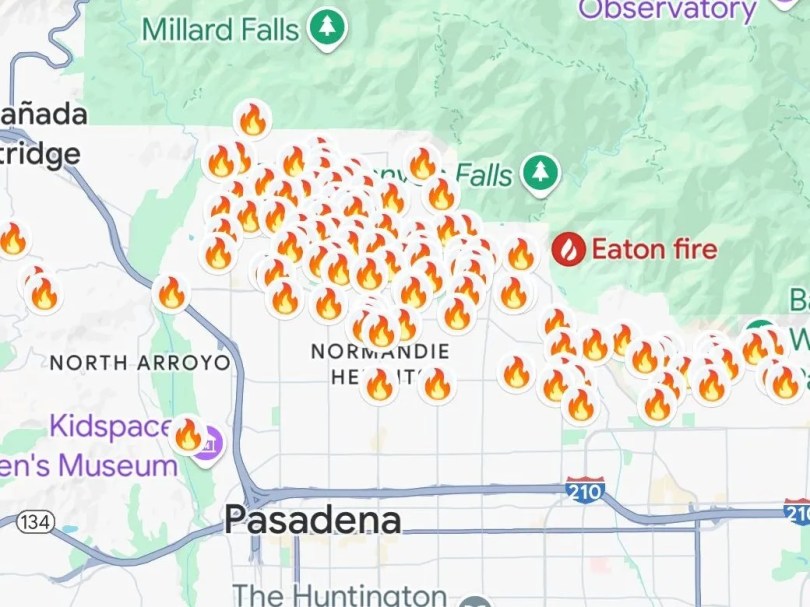
We are six months out from the Eaton Fire burning down our house, our possessions, our neighborhood, much of our town, and many of the businesses and places we went to.

How are we doing, you ask?

The short answer is…*shrug*

The longer answer is that it’s complicated. We’re doing fine. We’re doing terrible. We’re exhausted. We’re energized. We’re coming to terms with it. It’s all bunch of bullshit. It could be worse. It could DEFINITELY be better.

Certainly, it’s different now. We spent hours, then days, then weeks, driving a train with no track in front of it, and no destination other than somewhere else. Then we got somewhere else. We settled into a routine of phone calls, emails, lists, Zoom meetings, panicky freaking out, sleepless nights, remembering things we lost, and doing it all over again the next day. We went back to work, the kids went back to school, we started paying bills and making plans and trying to create some semblance of order in the somewhere else we’d landed in. We tried to make it, if not normal, then less chaotic.

It’s never going to be normal (whatever that is), but it’s not pants on fire crazy anymore.

And the rest of the world mostly moved on, as it should have and as it always does. For the hundreds of millions of Americans who didn’t lose their home in the January fires, there were more pressing concerns – work, school, political nonsense, TV, sports, going out to bars, doing whatever it is that people do and whatever it is we used to do. Eventually we even starting doing some of those things – we’ve gone to birthday parties and baseball games and I’ve even managed to watch some good TV.

But moving on? No, we’re not doing that. We are still trying to survive the fires.

Six months later the chaos and upheaval remain. Many of us are still performing the humiliating ritual of looking for a new place to live every few months. We have friends who are nearing double digits in the number of addresses they’ve lived at since January. We’re struggling to deal with insurance companies who want us to move back to unlivable homes, with landlords who have decided to abdicate any sense of responsibility or humanity, and with the vagaries and uncertainties of rebuilding. LA itself feels like it’s still in a haze of uncertainty, which isn’t being helped any by the current administration’s constant efforts to make things harder for us.

And we’re doing it with far less help than we had in the early days. The GoFundMe drives have long since ended, grants are mostly down to a trickle, and the Disaster Recovery Center that many of us spent more time in than our actual homes or workplaces is closed. Many of the agencies who staffed it are facing massive budget and personnel cuts – with an onslaught of summer weather disasters staring them down.

Meanwhile, building costs go up, ICE raids are thinning out the available pool of workers, and erratic tariffs mean it’s almost impossible to pin down how much new homes will cost – only that they will cost more than any of us were insured for. The long-term effect on our mental and physical health is just as unknown, as an entire city tries to cope and compartmentalize the trauma we’ve all gone through, just a few years removed from the trauma of COVID.

I still wake up remembering things we didn’t take when we evacuated. The grief of losing the house mingles with the grief of losing my mom, which has its own anniversary next week. I’ve lost things that were meaningful to me, books and t-shirts from college, cards from our wedding, LEGO pieces that were 40 years old and that aren’t made anymore. Some could be replaced at great expense, others never. And I still hear the shrieking siren of the emergency evacuation alert in my head. Not as much as I used to, but it’s there. I relive evacuation day all the time, I remember every aspect of it like it was yesterday, even as I struggle to remember to do basic things that have to get done, or what people’s names are. As it turns out, trauma and cognitive impairment go hand in hand. So that’s great.

But it’s not all doom and despair.

We’ve gotten closer to our community and our neighbors, as gatherings at parties and kiddo activities become impromptu group therapy and recovery sessions. Our kids have amazed us with their resilience and humor. Many of us, though certainly not all of us, are getting a chance to build brand new homes. I’m only half-joking when I say that the fire helped me with my clutter problem and stalling on upgrading my wardrobe. And I’ll never run out of things to talk about in therapy – or write about or be interviewed about.

But beyond all that, the last two years, from losing my mom in July 2023 to losing the house a year and a half later, have told me that I’m far stronger and more durable than I could have imagined. I have endured multiple life-altering losses, and I’m still here, still cranking away at my work, still deluging my kids with corny dad jokes, still rooting for the absolutely terrible White Sox, still trying to be a good husband and person and citizen. Trying to pay forward and pay back all the goodwill and generosity we’ve gotten in the last six months.

And still getting out of bed every day, doing what I can to help us rebuild. Six months is a long time, and not a long time at all. So if you feel like it, check in with me or another fire survivor. Or any trauma survivor anywhere, who is dealing with things a long time after they happened.

We would appreciate the love.

Eaton Fire #15: I Don’t Live Here Anymore

I’m an independent journalist with an uncertain road ahead. To support my work telling the story of the Eaton Fire and its aftermath, please consider a paid monthly subscription to my Patreon page. Thank you!


It’s an overcast April day in Los Angeles, and I’m staring at the hole in the ground where my house used to be.

It burned down in the Eaton Fire of 2025, one of thousands of homes in Altadena that were destroyed by a fastmoving wildfire that overwhelmed everything around it and sent hundreds of thousands of people fleeing. It once was a house full of love, the accumulation of 40+ years of stuff, of memories. The first birthday parties for the kids. Watching the Dodgers win two World Series titles. Spending months isolated during lockdown having impromptu stuffie tea parties and making convoys with toy cars that are all gone. Holidays and parties and long nights when I felt like nothing was going to work out and great days when it all worked out.

Now it’s a hole in the ground.

If one wanted to be pedantic, it’s not really a hole, per se. It’s too wide and not deep enough – only six inches below the ground, just enough to take away the topsoil rendered toxic by the polluted slurry of ash and dust the fire left behind. It’s more of an indentation, really, roughly in the shape of a foundation where a house used to be. A depression, perhaps. Not a pit, though. Nor a trench. And really, not a hole.

If there’s a technical term is for what I’m staring at, I can’t immediately think of it. It’s hard to think or feel anything.

Mostly what I’m feeling is dizzy. There’s nothing to orient myself to, nothing that serves as a marker for where things start and end other than a few fenceposts. It feels like looking at a distant and blank horizon on the water, disconcerting and unsettling. Or maybe that’s the feeling you get when you’re looking at what used to be your house and now is just…nothing.

We lived here for seven and a half years, planning to spend far longer in it. Then came the Eaton Fire, and whatever we had planned and dreamed would have to be put on hold. That blaze, when paired with the Palisades Fire in Malibu, destroyed 18,000 single family homes and apartment buildings.

18,000 depressions in the ground, full of dirt that once held up homes. 18,000 families who are on a long road of recovery and rebuilding, who are asking themselves every day how this happened and what they do next.

The ground is rough and uneven. Half the driveway is gone, cut up to ensure access to the footers of the house. It’s all beaten up from the massive excavator that the Army Corps of Engineers’ contractors used to scoop up the remains of our lives and drop it into a dump truck.

Watching the excavator a few days earlier as the debris removal began was truly one of the more bizarre moments of life since the fire. It would pick up something that was once meaningful to us – our grill, the bathtub where we bathed the kids when they were little, the dishwasher I loaded the night of the fire – then move it to the center of the debris pile, then rear back and smash it flat, like Godzilla stepping on a tank. Then the flattened piece of debris is scooped up and dropped in a plastic-wrapped flatbed for eventual disposal somewhere far away.

Eventually, it’s all gone except the dirt.

Looking at the ground, hearing the endless convoy of trucks and excavators going up and down our once-quiet street, and seeing the other cleared plots of land, I’m thinking more than anything of what it took to get from where we were three-plus months ago to where we are now. From a burned out ruin to a plot of land, in a neighborhood once full of burned out ruins that will slowly become habitable again.

Certainly, the effort to remove all of this debris was massive, requiring a huge amount of both high-level coordination and work on the ground. Most of the workers we’d spoken to hadn’t had a day off since the beginning of February. Multiple agencies had to put together a plan for how to remove the contents of both Palisades and Altadena in a way that was both safe and didn’t drag on for years. The EPA had to inspect every lot for hazardous and toxic materials. Contractors had to be hired, systems had to be designed, pathways mapped out, dump sites figured out, procedures codified. You need a lot of guys, a lot of equipment, and a lot of material – and you don’t have a lot of time to do it. And someone had to figure out who was paying for it.

It took dozens, maybe hundreds of people working madly to just get to a point where there was a plan to take our debris pile and turn it into the depression in the ground I was looking at. The process still has some creaks to it – the “72 hour call” you get from the Corps to let you know your debris removal is imminent is actually a “couple of days or two weeks” call. Ours came late on a Friday, and we didn’t get an update for another week, when we were told the walkthrough of our property might happen the next day – and it actually happened late the day after that. But it did happen.

Before the debris could be removed, it took heroic efforts by first responders to put the fires out in the first place. A level of courage that most people – i.e., me – will never have or need to summon up. And it will take an equally massive effort by thousands of other builders working for other agencies and companies to ensure that this block of Altadena full of depressions in the ground doesn’t stay looking like this. As much as we’d like our old homes back, we’d also like new ones, thank you very much.

That doesn’t just happen. It takes designers and architects, contractors and subcontractors, specialists and inspectors, countless tons of wood and metal and whatever insulation is made out of. And it will not happen quickly, or cheaply.

Then there’s what happened before the fire itself. The sequence of events that played out not just on the day of the fire, but in the decades and centuries before it. Hundreds of years of a slowly changing climate that’s not slowly changing anymore. A hundred-year-old town built from wood and full of drying out greenery, where homes were passed down through the decades but rarely brought up to code. A megacity built in a desert and stuffed into the crevices between cliffs. A land of milk and honey where the ground shakes and the sky burns. A water system stretched beyond its limits and battered by a 100 year wind storm happening for the second year in a row. Officials out of their depth and early warning systems that didn’t work and electrical lines that should have been off but weren’t.

So many failures. So much accomplishment. No wonder I’m a little dizzy.

I stepped back from the driveway onto the back patio, or what’s left of it. The pavers are loose and cracked, so I quickly stepped back off. Trucks rolled by and I worried that my car was too far from the curb because of the sandbags. The horizon was too long, too unobstructed. After a few minutes at the depression in the ground, I walked back to the car, and drove back from my scraped-up old life to the work-in-progress of my new one.

How did this happen? I thought to myself. What do we do now?

It wasn’t the first time I’d asked myself this. And it wouldn’t be the last.

Eaton Fire #14: Ash, Toxicity, and the Illusion of Safety

I’m an independent journalist with an uncertain road ahead. To support my work telling the story of the Eaton Fire and its aftermath, please consider a paid monthly subscription to my Patreon page. Thank you!


Nobody knows who first coined the term “safety is an illusion,” though there are a number of internet memes attributing it to various people. It’s also one of those things that people don’t actually want to believe is true. We want to be safe, and we do everything we can to put ourselves and our families into situations that maximize safety. If safety is an illusion, then we’re wasting our effort and should be prepared for the worst thing to happen at any time.

Obviously, losing your home in a fast-moving wildfire featuring embers blown like missiles at 90 miles per hour is pretty good proof that safety is an illusion. We believed our house was south enough of the fire danger line in Altadena to be safe – and that was pretty clearly an illusion.

But the illusion of safety extends well past the fire itself and into the cleanup and recovery.

Remember the first days of COVID lockdown, when nobody knew what was safe or not? We weren’t sure whether we had to wipe our groceries down, if masks were necessary or useful, and how transmittable the disease was. Nobody knew anything, and it was madness. Cleanup after the Eaton Fire is like that. We don’t know how safe the soil is, how breathable the air is, what remediation efforts will work and won’t work, and how much of the toxic crap in the air we can take in before it starts to be detrimental to our health.

And it’s madness.

Right now, there’s a remediation company working across the street from our temporary housing. A guy in a white hazmat suit is power washing the roof, trying to get what’s likely toxic ash from the fire off it. That’s great – except does that work? If it does make life in the house safer, was it not safe before? What actually happens to the particles of ash that are sprayed off the roof? Do they go on someone else’s roof?

In the early days of cleanup, the LA County Public Health department issued “a Public Health Advisory for individuals residing within 250 yards of a burned structure or parcel within or near the Palisades and Eaton burn areas.”

Residents in these areas may face an increased risk of exposure to hazardous substances from ash, soot, and fire debris before the completion of Phase 1 (hazardous materials removal) and Phase 2 (fire debris removal). Exposure to these materials may lead to physical health symptoms (American Chemical Society, EST Air, 2025, 2, 13-23) and may pose long-term health impacts.

Okay, that’s great. Except why 250 yards? Why not 200 or 300? According to the Altadena Town Council, “The 250-yard perimeter determined for the Eaton Fire was initially based on prior wildfire contamination studies and CalFire mapping, which factored in historical data and the likely settling of fire ash and toxins.” The Eaton Fire had a much smaller footprint than major wildfires like the Camp Fire of 2018, and destroyed fewer structures than that blaze – but Eaton burned one tenth of the acreage, but half of the number of homes. This means the land burned by the Eaton Fire was much more densely packed, not to mention the ash from the burned homes was thrown for miles in every direction by the high winds.

So the 250 yard perimeter sounds a lot like an illusion of safety. A well-intentioned one, for sure. But guesswork. What are we supposed to actually do about this advisory, given that many of us are actively going to our properties, driving in the burn zones, or just live near them? Plenty of surviving homes in Altadena are near burned out structures, but not right next to them. Are they safe? Can they be remediated? There’s just no long-term data about what happens to people when they are regularly exposed to a mix of burned plastic, wood, copper, lead, PVC, lithium-ion batteries, insulation, etc.

As far as outside the burn zone, there’s already evidence from past fires that 250 yards isn’t enough to protect people from exposure to toxic debris, and that physical effects can still be felt far downwind, and that homes can act like sponges for this material, even after they’ve been cleaned. A study of homes after the Marshall Fire in Colorado in 2021 found that hazardous chemicals lingered in homes for weeks after the blaze, and lingered longer than expected.

And there’s some concern that the particles of toxic ash are so fine that they can’t effectively be filtered out by N95 masks. A particularly troubling New York Times article said researchers found that chemical contamination was fairly low outside the burn zone, but referred to residents in the burn zone coming home to a “toxic soup” of chemicals and compounds when they return. So that’s not great.

For folks rebuilding in the burn zone, safe debris removal is paramount, and the Army Corps is doing a good job so far of safely taking out burned debris, wrapping it in plastic, disposing of it, and wetting the ground down while the removal is happening. But is this a guarantee of safety? How can it be?

We’re facing innumerable questions that nobody has an answer to, and where there might not be one for years. The Army Corps is removing six inches of topsoil underneath the foundations of burned homes, but is that a safe enough amount? We don’t know, and unfortunately, the Army Corps isn’t doing soil testing – because FEMA stopped authorizing post-fire soil testing after the Camp Fire, due to it being “tedious and inefficient.” The EPA isn’t doing it either, believing that removing six inches of topsoil is enough to abate any danger.

So is the land we want to build houses on safe? Is the soil where we want to grow trees safe? Will our bedrooms and playgrounds and schools be safe? What about the water pipes that survived the fires? Are the sewer pipes safe? Will the debris removal kick up more ash that lands in places that aren’t easily accessible? The answers are basically between probably and maybe.

To find an instructive example for how safe prolonged exposure to toxic dust and debris is in the immediate area outside a burn zone is or isn’t, I looked not at another wildfire, but at 9/11. The toll that the toxic slop of the destroyed World Trade Center took on first responders is horrific, but the attacks sent toxic ash and dust miles in every direction, covering Lower Manhattan and parts of Brooklyn as well.

Even a year after the attack, there was limited data on what the exposure would do to the hundreds of thousands of people who lived and worked in those areas, many of whom were breathing at least trace amounts of compounds that had never even existed before they were created in the heat and intensity of the explosions. After a few years, more New Yorkers who lived and worked in the area near the WTC were coming forward with signs of respiratory illness – to the point where Congress finally authorized a compensation fund for health effects due to the attacks, though it took years of political wrangling and pointless arguing.

As of 2024, there are about 124,000 people registered for the WTC Health Program, but only about a third are residents of Lower Manhattan or the surrounding area. The rest are first responders, volunteers who went to the site, or workers from the immediate area around the WTC complex. About 400,000 people likely were exposed to the toxic aftermath of the collapses, and many did suffer from headaches, congestion, COPD, and long-term illnesses. But how much of that is directly from the debris, and how much of it is from just living in New York City? What would have happened anyway? Nobody really knows. And cancer can take decades to develop, meaning we likely still don’t know the full toll of the ash and dust of 9/11.

Certainly, the Eaton Fire didn’t arrive with the sudden violence of the Towers collapsing – there weren’t tens of thousands of workers covered in toxic debris and jet fuel residue. But the large scale dispersal of debris is a decent enough analogue, particularly in a situation when there are so many unknowns at work. So while we fret over the choices we make as we rebuild homes, we should also know that what we’re getting into doesn’t have a lot of precedent in American history, and many of the questions we have won’t be answered for years, if they’re ever answered in our lifetimes.

So yeah, safety is an illusion. Which doesn’t mean we can’t make safer choices and do the best we can to ensure positive outcomes. We can do as much abatement and cleanup as possible, pay out of pocket for testing, hold public officials and agencies accountable, keep vulnerable children away from burn zones as much as possible, and err on the side of caution.

We have to live our lives, and many of us want to rebuild our homes and communities. Nothing is risk-free, and the tradeoff is worth it. But it is a tradeoff – and at some point, that trade might be called in.

Eaton Fire #13: Seeing is Believing

I’m an independent journalist with an uncertain road ahead. To support my work telling the story of the Eaton Fire and its aftermath, please consider a paid monthly subscription to my Patreon page. Thank you!


The gapers are easy to spot in the burn zone.

They drive slowly, meandering their way through the blocks of burned out homes having no particular goal or destination in mind. They often slow down even more when they see people sifting through their rubble, or crews doing work. Sometimes they point. Their mouths hang open. You can tell they’re saying some variation on how awful and shocking it is. And when you notice them, rather than give the wave that a resident would give, they turn away and speed up, in some vain hope that you won’t have noticed their gawking at your misery.

It’s easy to look at the people rambling around Altadena and getting a firsthand look at the carnage and see disaster tourists. Certainly, it’s understandable to get pissed off at the folks clogging up traffic and annoying locals so they can tell themselves they understand what’s happened. But as someone who has been noticeably gawked at outside my burned down house, I choose to look at outsiders seeing the burn zone for themselves as doing the right thing in the wrong way. People should see it. They should drive up and look at what’s happened, because that’s truly the only way to internalize it if you haven’t gone through it.

The burn zone as it existed once the fires were out won’t be around much longer. We’re well into Phase Two debris removal, with the Army Corps of Engineers having cleared dozens of lots in around Altadena. The immediately familiar traces of burned homes – chimneys still standing, staircases going nowhere, half-destroyed walls – are being taken away. Even on my street, plots of land are being cleared. The ACoE hopes to be done with debris removal by the end of 2025, but for most property owners, it should happen much sooner.

I’ve also seen firsthand how friends who have seen the disaster area finally understand what we’ve gone through. Seeing it with your own eyes changes your view of the fire. It becomes less something that happened to someone else and more something that could happen to anyone, even you. Maybe you’ve seen it on TV, or spoken to a friend who lost their home. But once you’ve actually been there and witness the scope of the devastation, your understanding of the disaster will change.

This is especially true for Angelenos who haven’t made their way north and east to see what’s left of Altadena. LA is a big city and most of it is just fine – meaning it’s easy to compartmentalize the fires as a disaster that happened in a different neighborhood, a different part of town. But while LA didn’t burn down, the town has been in a haze for months. Businesses have closed, work in the entertainment industry is crawling, and there is a huge diaspora of refugees from the fires moving into new areas that they don’t know, and where they don’t know anyone. The stereotype of LA is a bunch of neighborhoods with no center, where nobody talks to anyone else. But that hasn’t been our experience losing our home – the city has come out for us. It should take the final step and literally come out for us.

With cleanup progressing, the chances to see the burn zone as it was are disappearing. Altadena will look very different in just a few short months, and most of the worst of the damage will be gone. So I urge people either in LA who haven’t, or those who will be here soon, to come up to Altadena and see the burn zone while you can.

Do it respectfully, do it in a way that doesn’t disturb rebuilding or recovery, and doesn’t turn victims into museum exhibits. But if you can, see just a small part of what we’ve seen. Experience what we’ve gone through to the extent that you can. And I promise you will understand it in a way that you couldn’t have before.

(Note that this doesn’t apply to the Palisades, much of which is still restricted to residents who need access passes to get in.)

It’s not an easy sight. I’ve heard visiting burn areas, whether in forests or cities, described as traumatic, shocking, and even dystopian. Of course, maybe it shouldn’t be easy. Losing our home has been traumatic, shocking, and dystopian. The town looks like it was bombed from the air, there are still burned out cars and scattered ephemera from decades of living in these homes. It’s ugly and brutal, jarring and traumatic. But it’s our lives. These were our homes, our businesses, our streets. If we’re all in this together, then we should at least all know what we’re in.

So how do you do this? If you have a friend or a connection in Altadena, talk to them and see if they’ll escort you on a drive to their property and around their property. Not everyone will be comfortable with it, but it’s a good place to start. And if you aren’t directly connected to the area, I’d recommend at least coming up to drive the main streets in Altadena. Lake Avenue, Lincoln Avenue, and Altadena Drive are all major thoroughfares with both homes and businesses on them. Nobody would think twice about someone using them to get a sense of the scope of the devastation – and there’s only a certain amount of slowing down you can do.

I wouldn’t recommend just driving through more residential areas, since these are likely to be extremely busy with workers and clearing. If you do have someone to go visit or take you on a tour, drive the way you normally do. Don’t slow down and point, definitely don’t take pictures of houses of people you don’t know, and definitely definitely do not get out and just start talking to people. None of us want or need to be asked random questions by people from the rest of the city.

When you go, please make sure you support local businesses. Even shops and restaurants that survived and aren’t in the direct burn zone likely lost weeks of business. Some are only just now opening. So make sure you spend money, tip well, and don’t ask a bunch of prying questions.

There might be fellow fire survivors who disagree with this. It’s not unreasonable to think that anyone in Altadena who doesn’t need to be here is just someone clogging up the roads, and driving through a burn zone when you don’t need to is the worst type of feel-good tourism. I get it. But I also don’t want the fire to be swept into the distant past once the ruins are cleared and the new homes are going up. I want people to remember what we went through. And for the Eaton Fire, seeing isn’t just believing, it’s remembering.