Eaton Fire #7: A Visit to the FEMA Camp

I’m an independent journalist and author with an uncertain road ahead. To support my writing, please consider a paid subscription to my Patreon page, or you can Venmo me directly, @rothschildmd. Thank you so much!


I didn’t see President Trump’s appearance with state and local officials in Pacific Palisades on Friday, except for a few brief snippets I caught live on NBC as I was waiting to make an appearance to talk about LA fire conspiracy theories (yes, I did sprain my shoulder patting myself on the back there.)

What I did see was totally unremarkable for what we’ve come to expect from Trump over the last decade. It was hostile to the point of being uncomfortable to watch, bizarrely confrontational towards Governor Newsom and other California politicians, full of barely-coherent “science facts” about water and the giant imaginary spigots that it flows from, and studded with contradictory promises that residents will “get everything they want” and that residents will also get nothing unless the state implements pointless voter ID provisions.

One thing Trump made abundantly clear is the burning white hot hate he has for FEMA. After spending a huge amount of time on the campaign trial spouting insane misinformation about FEMA abandoning North Carolina after it was hit by hurricanes, he’s done the same with California. He claimed the agency is “not good,” corrupt, incompetent, and doing nothing for disaster victims. And he threatened to dissolve it and simply leave emergency recovery to the individual states – an act many pundits pointed out would disproportionately hurt the states that support him the most.

Naturally, he contradicted himself there as well, while also seeming to not know that FEMA is part of the government, claiming that “rather than going through FEMA, [emergency funds] will go through us.”

To be completely frank, as an Eaton Fire victim, I’m not paying one damn bit of attention to what Trump is saying about the fires. Trump doesn’t care what happened in Altadena, and all but ignored the Eaton Fire entirely. He doesn’t care that I spent Friday sifting the ruins of our house and shoveling the wreckage of the last 20 years of my life and the lives of my kids, an experience so strange and depressing that I’m not sure I can write about it more than I already have. I’d tell him about picking up burned baseballs only for them to disintegrate, or finding the charred metal tins that held the ash of the card games we played – but I can’t imagine he’d see anything in it for him.

We aren’t talking about Trump in our recovery. His pontificating about giant water spigots being turned on by the military and California dumping millions of gallons of water to protect an endangered fish are not helping anyone sort through the maze of forms and calls and meetings that confront us every day as we start the rebuilding process. His ludicrous sparring with Newsom isn’t ensuring residents get the mental and financial help they need. And when the TV cameras are off and the public’s attention has moved on, it won’t be Trump’s promises to gut FEMA that will be moving our community forward.

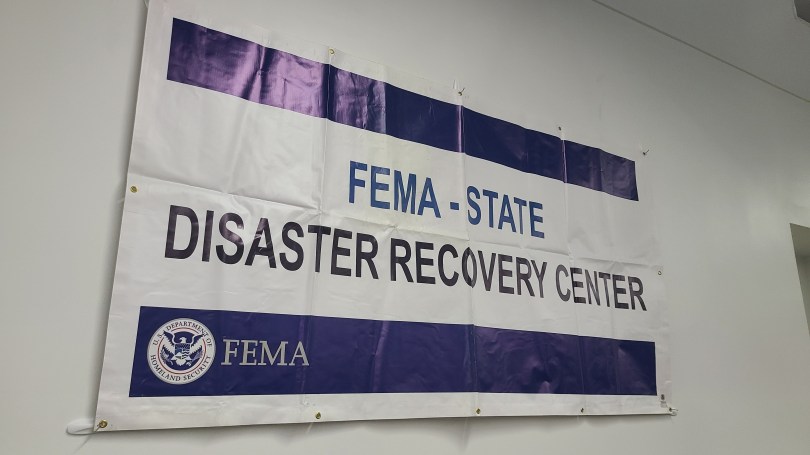
It will be the small army of workers and contractors we met with at a newly opened disaster recovery center in Pasadena today. On its first day in operation, built to replace a different recovery center, it seemed to be fully operational and ready to go. Table after table was run by people handing out forms for federal, state, and local departments – tax assessors, public works, mental health, hazardous materials abatement, critical documents. And more are coming, all ready to guide Eaton Fire victims through every aspect of the process of collecting insurance, ensuring safe removal of debris, and taking the first steps in rebuilding. They even had snacks.

And yes, FEMA was there. Along with representatives from many other federal agencies that our tax dollars pay for, and that make our lives better. The people that Republicans have been consistently attacking as lazy, overpaid, unqualified professional beggars who can’t get “real jobs” are offering a hand up to disaster victims at their absolute lowest.

They answered our questions, helped us fill out the forms we needed to fill out, walked us through who we needed to call, and reassured us that things will get done. The transition from rubble to home will go as fast as it safely can. I left with my head spinning, a bag groaning with forms and documents, and a better understanding of the complex process that lies ahead.

What a process it will be. Nothing like the recovery Southern California is about to undertake has ever been attempted. Two cities getting back off the ground after nearly 18,000 structures were annihilated in the second and third most destructive fires in the state’s history. It involves a mind-boggling amount of coordination and communication. Like most large-scale disaster responses, there’s no blueprint for what federal, state, and local officials are embarking on. Some of it has to be made up on the spot given the scale of the fires. And a lot of it is just a bunch of question marks at this point.

Naturally, this kind of massive and coordinated effort makes for a frustrating and confusing user experience – especially given how exhausted and dispirited the “users” are. Several times at the disaster recovery center, we got unclear answers, were told to go talk to a different agency that directed us back to the first agency, and got told things that either made no sense or contradicted other things we heard. Very few people were willing to give anything other than a ballpark estimate of when cleanup will really start and end, or when building might get going. We also got a lot of “we’re still figuring it out.”

Because they are. We all are. I’m figuring it out minute to minute and have no idea what comes next. And I don’t have the added responsibility of having thousands of employees and tens of thousands of burned out residents who need direction and answers and to know where to get a new drivers license. Much of this is still being figured out or legislated into existence. And when things go wrong, the shit will roll uphill, to the feds.

It’s not hard to see why. It’s always been easy to crap on the federal government. It’s especially easy to crap on FEMA, an agency that’s seen by the far right as both a cartoon villain constructing internment camps for patriots and as incompetent funnel for graft and failure.

But the people who were at the recovery center, from chaplains to volunteers to clerks to public employees to high-ranking officials to folks who’d come in from all over the country were doing their best. Mistakes and confusion are going to happen. We’ll figure it out because we have to, and we’re probably going to do it without the president’s “help.”

The road ahead for us is long, uncertain, and bound to be frustrating and painful. But there are tiny glimmers of daylights, and with enough help, just about anything can be accomplished. Except turning on the giant California water spigot, because that’s not real.
Eaton Fire #3: The Rumor Mill and What to Do About It

I’m an independent journalist and author with an uncertain road ahead and almost no time or space to do the work of debunking disinformation. To support my writing, please subscribe to my Patreon page, or Venmo me directly, @rothschildmd.


One of the reasons certain people are drawn to conspiracy theories and alternative realities is that they provide easy answers to complex problems. It’s comforting to believe that someone has a plan, has control over what happens to you, and can be blamed when it all goes wrong. Whereas the most difficult and frustrating answer to any question is the one that no conspiracy theory provides: the answer of “we don’t know.”

Losing your house in a vast cataclysm is a catastrophe that’s always going to provide more questions than answers, more rumors than facts, and more uncertainty than settled knowledge. As such, it’s rife with the possibility for exploitation, scams, fraud, and tumbling down rabbit holes of disinformation and conspiracy theory.

Some of the questions are philosophical and unanswerable. Other questions are scientific, about the random and unknowable nature of fire. Of course, there are the questions brought up by the conspiracy theorists and disinformation gurus. Those are the ones that I and my fellow journalists work hard to try to come up with the actual answers for, as opposed to the false yet comforting ones that so many believers get sucked into.

The vast majority of the questions, however, are logistical. They revolve around timing and contacting people and timelines and knowledge that you don’t have access to because nobody does. They involve things that haven’t been decided upon yet, or take varying amounts of time, or that there’s no plan for. Those are the questions for which “we don’t know” isn’t just the best answer, it’s the only answer, at least for now.

Will our neighborhoods be sold off to developers? We don’t know.

Where will the kids be going to school? When will they start? We don’t know.

What exactly is FEMA going to do for our community? We don’t know.

Since the fire, I haven’t been paying as much attention to the conspiracy theories – which is probably not something that a journalist who covers conspiracy theories should admit. For one, I’m too busy trying to rebuild our life. But beyond that, it’s too abstract, too unmoored from reality to seem to matter in the moment. And in many cases, they’re just wrong in ways that I know to be wrong. The conspiracy theory that “DEI firefighters” caused the blaze to grow out of control is ridiculous, because I’ve seen firsthand how courageous and skilled the firefighters have been. I don’t need to debunk it because the fact that virtually anything in Altadena still stands debunks it.

Conspiracy theories about “space lasers” starting the blaze, the fire being set by the deep state to cover up P. Diddy’s crimes, or Gavin Newsom using the fires as a giant land grab to create “15 minute cities” to take away our freedom haven’t come up at all in any of the chats, text threads, Facebook groups, or phone calls I’m in with fellow survivors of the Altadena diaspora. It’s just not something any of us give a damn about.

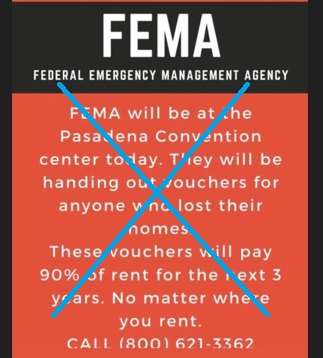
But that doesn’t mean there isn’t a rumor mill, and it’s a powerful one. Whispers spread almost instantly of buildings burning down that didn’t, FEMA giving out vouchers that it wasn’t, of families getting burned out that weren’t, lawyers skulking around with bad intentions, checks coming to you that aren’t, taxes or fees waived that weren’t, and on and on. The rumors are powerful, filling people with either false hope or unwarranted fear. And they are everywhere in my community right now, spread by people not out of malice but out of sheer desperation to know what the hell is happening and what happens next. Rumors are spreading because nobody knows anything.

“We don’t know” is a deeply uncomfortable answer. But for so many questions, it’s all we have.

When will the water be safe to drink again? We don’t know.

Is Altadena going to keep its charm and diversity? We don’t know.

Should I sign on to one of these lawsuits? Who’s fault even is this? We don’t know.

If it helps, there are ways I’ve learned to navigate rumors that spring from uncertain times. One very easy way, particularly when it comes to conspiracy theories (which aren’t exactly the same as rumors) is to simply not engage. Getting into an argument with idiots on Twitter about how fire works and that trees survive fires because they’re full of water is not a good use of anyone’s time. I’ve ignored most of the conspiracy theories just because they’re really stupid and a waste of the energy I have to expend on things like making sure I have clean pants (yes!) and am getting enough sleep (definitely not).

Rumors are harder to deal with because they come from a place that wants to do good, especially when it involves spreading around news of vouchers or checks or lawsuits or areas that are safe to enter. Be gentle with the people sharing them, because they’re trying to get answers and find help. We all are. Generally speaking, it’s a good idea to be extremely skeptical of anyone offering something that seems too good to be true, doesn’t make sense, or falls outside the bounds of how you know things work. If you see a meme or picture going around promising something or claiming something, that doesn’t mean it’s false, but it does mean you might want to take a few seconds and dig a little deeper – if you can. The rumors are flying so fast that it’s hard to even get a handle on all of them, much less see if any of them are actually true.

It also means not spreading news that hasn’t been confirmed, and that’s really hard to do. Even I’ve done it. I told our insurance adjuster that the Walsh house from Beverly Hills 90210 on Altadena Drive had burned down, when it hadn’t – “only” the house next door had. It’s a small thing and easily correctable, but I only said it because I heard someone else say it. Bad debunker, but understandable.

Most people in situations like this aren’t spreading rumors to be malicious or to troll people. Believe it or not, most people who aren’t terminally online and utterly brain poisoned don’t think that way. Rumors spread because we either want to know or think we know and want others to. It’s not a bad place to come from. Be gentle and understanding. We just want certainty and control, in a horrible time that offers nothing but uncertainty and helplessness.

When will I have a home to call my own like I used to? We don’t know.

Will my kids ever run around in our backyard, carefree and settled? We don’t know.

Is anything ever going to be the same again? We don’t know.

And it’s going to be a long time before we do. So the rumor mill will grind on, forcing us to cope with a deluge of falsehood and whisper, while we’re all just trying to get through the day and rebuild our lives.

Altadena will rebuild.

We’re Drowning in a Deluge of Nonsense, So Let’s Buy a Rope

Hurricane Milton has died off after heading out into the Atlantic Ocean and dissipating. The damage appears to be bad, but not quite as bad as a category 5 hurricane might have inflicted, because people had time to prepare. Those in the path of the monster had time to flee, while those outside it had time to stock up on the supplies they’d need to ride it out.

The damage in North Carolina and Georgia from Hurricane Helene is far worse than Milton, at least so far, due to the storm maintaining it power while moving inland after striking Florida. But at least some people there had some time to do what they could to evacuate or get ready.

In the midst of these two awful storms there was another deluge. Not one that destroyed property or flooded homes, but one that imperiled people and hampered the response and recovery nonetheless. It imbued many survivors with a sense of hopelessness, and inflamed their paranoia and suspicion. And despite the certainty that it would take shape in at least some form, virtually nobody was ready for it.

We weren’t ready for the storm conspiracy theories, outright lying, grift, emotional manipulation through AI, antisemitic bullshit, and misleading viral nonsense that followed just behind the two hurricanes. We weren’t ready for people invent new realities out of thin air, realities where FEMA was blockading aid and confiscating property, where terrified little girls were left adrift with their puppies, where government weather machines were steering the storm into its most destructive path, and where the executive branch was too busy vacationing and appearing on sex advice podcasts to do anything to help the desperate Americans screaming for a lifeline.

That’s the reality that hit America and the world like a ton of storm-tossed bricks over the last few weeks. Never mind that none of this happened, and all of it was inflammatory bullshit spread by right wing politicians and social media influencers to help get Donald Trump over the finish line. For so many desperate Americans it felt true. It was true to them. So it was true.

After spending a decade writing about conspiracy theories at a time when conspiracism has become a primary driver of politics and commerce, it wasn’t surprising to me why this happened.

Some of it is definitely because of the election, given that Helene hit two swing states that Trump desperately needs to win. So if it takes exploiting the damage done by a storm to make Kamala Harris look out of touch and unsympathetic, then that’s what it takes, casualties be damned. It’s also about climate change denial, something that the far right has practiced for decades and that’s increasingly hard to maintain as the climate quickly and drastically revolts against us.

But more than that, I wasn’t surprised it happened because it happens every time. And it happens for the same reasons that drive conspiracy theories about everything else: from mass shootings and disasters to COVID and 9/11, all the way back to the Great Fire of Rome. Something outsized and destructive happens, and we grope in the darkness for information. Rapidly moving events defy easy explanation, and we’re desperate to know why it’s happening, what’s really going on, and who did it to us. Social media and the internet didn’t create any of this, it only sped it up and lowered the cost of entry. So the new problem is the same problem as the old problem, just faster and dumber.

That said, if the new problem is the old problem, why was nobody ready for the old problem? We know it’s going to happen because it always happens. So why were we unprepared for it happening? Why were the government agencies, news outlets, social media giants, state and local officials, and weather experts all so completely blindsided?

FEMA wasn’t ready to counter the fake our out of context AI slop images and stories showing it not only wasn’t doing its job, but actively making recovery worse.. Politicians at every level weren’t ready to counter the claims that they were heartless and cruel in leaving victims to die. Social media wasn’t ready to counter the insanity coming from its owners and and most prolific users. Media outlets weren’t ready to talk clearly and accurately about the deluge of conspiracy theories and the danger they presented. First responders, being a little busy doing their jobs, understandably weren’t ready or able to deal with the onslaught of nonsense about what they were or weren’t doing.

Obviously, you can’t prepare for what you don’t know is coming, or what you can’t conceptualize. But by now, can’t we see this coming? Why can’t we look at a looming event and ask ourselves “how can this be misinterpreted and weaponized against us?” It happens over and over, with every disaster and mass shooting, every “once in a century” event and election.

So why aren’t we ready?

For one, disinformation will always travel faster than information. It takes no time to make something up and share it, but it takes time to prove that the made up thing is made up. And at that point, it’s already out there. Beyond that, some people and industries still exist in a world where things on the internet aren’t part of the real world and don’t matter, and if you ignore them and don’t give them oxygen, they’ll die off. We know by now that this isn’t true, and that conspiracy theories allowed to fester with nobody paying attention will just grow in darkness. But this is a big shift for many longstanding industries, particularly government, to make. And some people may not want to seem overly approving of what looks like censorship. Government can’t even begin to play a part in solving the problem until it’s done in a way that doesn’t seem like an Orwellian disinformation ministry that wants to control your thoughts. Somehow, we’ve managed to regulate TV and radio, but the internet continues to be the Deadwood of media – no law at all.

Obviously, we’re weeks away from an election that has already seen a frenzy of lies unlike any other election in world history. And it’s only going to get more insane, an opera of countless voices all screaming lies at the top of their lungs into giant microphones that drown everything else out. We have no idea what exactly is going to drive the bullshit purveyors and their legions of believers, because it hasn’t happened yet. But it will happen – and it will be outrageously bad.

What can we do to prepare? And what can we do to prepare for what happens after that, for what can’t be known or even reliably imagined?

The first thing is that we, as people, can take ourselves off the chessboard. Don’t share bullshit. Don’t share it even to call it bullshit. If you have to, at least take a screenshot and mark clearly that it’s bullshit. Nobody’s perfect, but we can all do more of this. Call out your friends and loved ones sharing bullshit, quietly and in a way that’s firm but not insulting. Be the firebreak.

But this is a much bigger problem, one that has infected every industry and profession. So a big problem takes a big solution. And big solutions cost big money.

Every industry should know that disinformation and lies are a threat to their existence, and open their wallets to fight back against it.

Government agencies should have people on staff who understand how this stuff works, how to push back against it in a way that doesn’t infringe of free speech, and why it’s so bad for public health. Law firms and courts should hire journalists or experts (many of whom are out of work due to the proliferation of AI slop stories) to point out instances of defamation and harassment in the aftermath of epochal events, and be prepared to move against them quickly. Every news outlet everywhere of any size should have someone whose job it is to immediately point out when something viral is false and what’s true instead, and spend the money to get it out there fast.

And private citizens should have the resources and education to understand how conspiracy theories function, why they are effective, and what to look for when someone is attempting to manipulate them with bullshit. Yes people want the truth, but they don’t want to be lied to or made to feel stupid. And nobody wants to feel like they’re a potential victim of going down a rabbit hole and never coming out – which virtually everyone, regardless of party affiliation, is.

All of this is time-consuming. It’s not all going to work, and some conspiracy theories will always get through. And of course, all of it costs a lot of money to do it well and professionally. The far right is excellent at spending money on and making money off disinformation – and we have to get as good at doing it for the truth. If we want to be prepared for the next storm of bullshit, we have to spend some money on supplies. We have to be ready for what’s going to happen, even if we don’t know exactly what form it will take or where it will come from. When a hurricane hits, do you buy bottled water or do you put out a bucket and hope for the best?

You buy bottled water. You make the investment. We are drowning in a deluge of conspiracism, paranoia, and absolutely untethered realities. Let’s buy some rope and pull ourselves out.


Please support posts like this by subscribing to my Patreon page. My work is free, but time is money, as they say. Thank you!

Wireless Emergency Alert Paranoia!

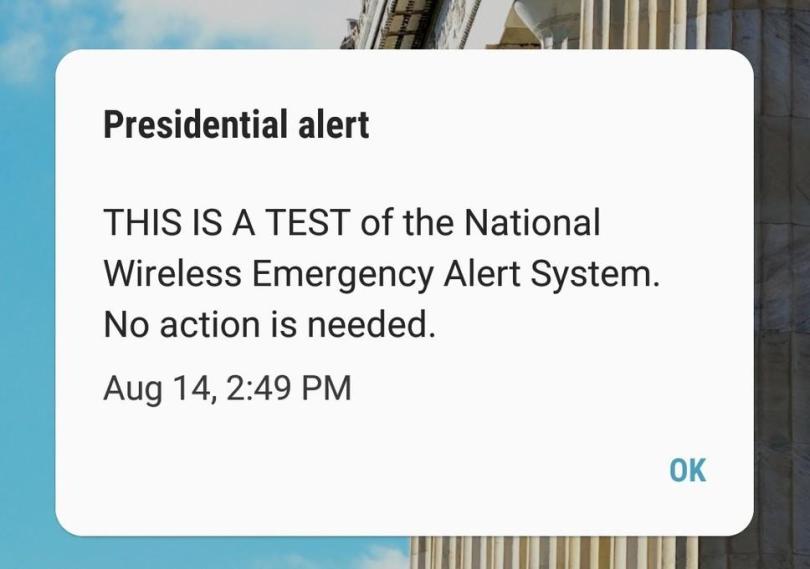
On Friday, the tinfoil hats of both far right and far left conspiracy theorists got just a bit tighter with the announcement from FEMA that the agency would run its first test of the cell phone Presidential Alert system.

First laid out in the WARN Act of 2006 and launched in 2012, the Wireless Emergency Alert (WEA) system is the logical extension of the Emergency Alert System, the national network of warning messages that can be sent out in the event of catastrophic events.

Such a national alert system has existed since CONELRAD came online in 1951. The systems have evolved through the years, and took on the duties of warning about local civil emergencies, such as severe weather, as well as oncoming nuclear horror. They all test weekly on the radio and on TV.

So there’s nothing new or novel about a national alert system sending test messages, nor is there anything surprising about a system being set up to reach people using the dominant technology of the day – cell phones.

Read More »