To help my work fighting back against America’s descent into conspiracism, please support me on Patreon at just $5 a month.
Get in losers, we’re going election denying again!
Since Donald Trump has never given up on the completely false notion that he actually won the 2020 election, it’s appropriate that the acolytes who made their names off 2020 election denial haven’t either. What else are they going to do with their time? Get actual jobs? Be useful to society? Why bother, when there’s grift to be grifted and marks to be riled up?
Of course, it’s not that simple. It never is with Trump. The far right has already spent months leading into the 2026 midterms pushing a buffet of proposed voter suppression laws, conspiracy theories, redistricting initiatives, revived audits of counties Trump unexpectedly lost to Joe Biden, and the SAVE Act – a law that would essentially make it almost impossible for large swaths of the population to vote. They know 2026 presents a golden opportunity for the Democrats to take one or both houses of Congress back, and make the last two years of Trump’s second term a never-ending series of hearings and impeachment trials.
The most troubling and most insane iteration of this drive to redo 2020 could be a draft executive order that would allow Trump to declare a national emergency based on foreign interference during Joe Biden’s victory, and essentially seize control over how Americans vote. Mail-in voting would be banned, draconian ID rules would be imposed, every American would be required to re-register, and all ballots would have to be counted by hand in public. The result would be massive restrictions on voting, and even the potential of Trump simply trying to “cancel” the election altogether as part of our non-existent “emergency.”
Obviously, this would be both completely unconstitutional and batshit crazy. Elections in the United States are the purview of the states, and the president has no power over them. The Constitution is absolutely clear on all of this. Most of these “ideas” are totally unworkable, and would be ignored by many states with congressional races the GOP needs to win. To be blunt, this isn’t going to happen, and would be annihilated in court if it did.
And yet, the last decade has seen Trump do all manner of things he “can’t do.” Unilateral wars, flights of egotistical fancy, taking control of the budget away from the House, and a conveyer belt of graft running through the White House are all things the president shouldn’t be able to do, and yet is just doing. Nobody stops him.
But before we resign ourselves to never having a free election again and being under Trump’s decaying thumb for decades to come, there are some caveats.
For one, there’s no real evidence Trump has seen this executive order, and he claimed that he had no idea what it was. Believe him or don’t, but as of now, this order remains a draft floating around the White House – even as 2026 primary contests are already taking place. And again, this EO is totally unconstitutional and unworkable and insane. Trump’s “elite strike force” lost more than 60 cases in their attempt to overturn the 2020 election. with many now facing sanctions of their own. Even the conservative leaning Supreme Court wanted nothing to do with their Hail Mary tries to undo the will of the people. It’s certain that if Trump signed such an order, it would quickly be buried in lawsuits and blocked.
But more than anything, the draft order is the handiwork of a cadre of 2020 election deniers whose reach and relevance are ebbing in the face of a new crop of unhinged white supremacist influencers. Many of these are people who rose to prominence specifically through insane conspiracy theories about the 2020 election being stolen by Italian satellites or Chinese bamboo fibers or COVID-19 being engineered or Serbian data farms stealing legitimate votes. They made millions of dollars through books, videos, subscriptions, and podcasts devoted to Trump having his rightful second term stolen by a vast conspiracy.
They are serial liars. They are professional scammers. And this might be their last chance to cash in. Once Trump is off the national stage, many of these people will be of little use to the GOP. And they know it.
The unworkability and total flaunting of the law of this potential EO is well-covered by more legalistic minds, so I won’t rehash it here. But I do want to focus on the people pushing it, to reassure everyone that just because some people say they have Trump’s ear doesn’t mean they do, or that what they say has any validity to it. Many are QAnon promoters, others are disgraced business figures who set their reputations and savings accounts on fire to defend Trump’s demented conspiracy theories. Again, these people make money when they lie, and the bigger and dumber the lie, the more money they make.
The “mastermind” behind the potential order appears to be 80-year-old lawyer Peter Ticktin, a longtime right wing attorney who has represented both his former classmate Donald Trump and former Overstock CEO Patrick Byrne is a variety of unsuccessful lawsuits. He also appears be the driving force behind trying to get his client Tina Peters, currently in Colorado state prison for allowing unauthorized access to voter rolls in that state, a pardon from Trump, despite not being eligible for a federal pardon. Ticktin’s website touts his experience in Divorce & Family Law, Mortgage Foreclosure Defense, Personal Injury, Estates, Wills & Trusts, Business Litigation, Entertainment Law, [and] Employment Law; none of which are election law. Because his election law experience is entirely based on conspiracy theories about the last decade of Trump-related shenanigans.
Joining Ticktin in this lunacy are a rogues gallery of familiar figures from 2020. One is MyPillow CEO Mike Lindell, most recently in the news for losing a defamation trial brought by former Dominion executive Dr. Eric Coomer, and for attempting to run for governor in Minnesota. Wouldn’t a sweeping revamp of American electoral laws at the 11th hour, making it harder and more complicated to vote, imperil his candidacy? That’s one of those rhetorical questions conspiracy theorists never answer.
If you like this piece, there are dozens more like it available on Patreon for paid subscribers. Just $48 for a full year!
Coming along for the ride is another familiar 2020 influencer, disgraced former national security advisor and “they’re putting the COVID vaccine in salad dressing” conspiracy theorist Mike Flynn, whose relevance on the far right has severely waned, and who also pushed Trump to declare a similar emergency in 2020 without success. Byrne is part of this crusade as well, as is another of his attorneys, the oft-sanctioned Stefanie Lambert, who is currently awaiting her own trial as part of alleged criminal activity around accessing voting machines in Michigan.
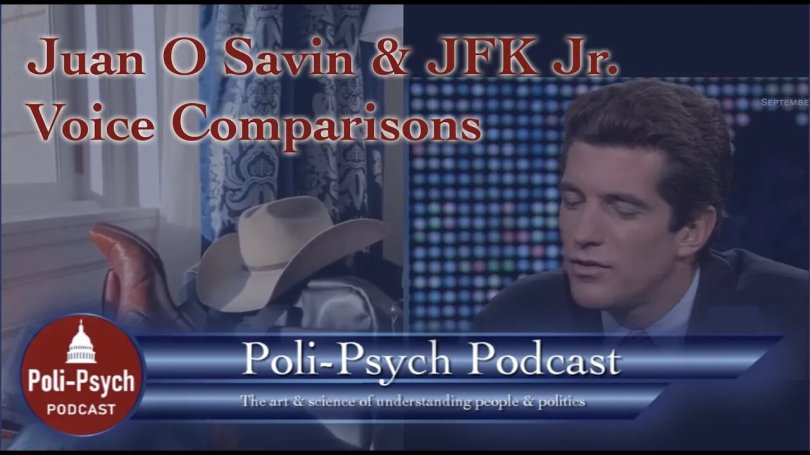
Many other people also claim to be part of this effort, or have been referenced as part of the team trying to get this order across the goal line. The most well-known is “Juan O. Savin,” an absolutely ridiculous figure well-known in QAnon circles for trying and failing to get a slate of election deniers into office as secretaries of state in 2022. He also is one of two different figures bandied about by fringe-dwellers to “actually” be John F. Kennedy, Jr., who died in a plane crash in 1999.
There’s also “Georgia’s most influential conspiracy theorist” Garland Favorito, a hardcore election denier who has also espoused claims that, among other things, Mossad did 9/11. And let’s not forget Obama birth certificate crank and “Infowars QAnon correspondent” Jerome Corsi, who has claimed to be part of the team drafting the order that will “safeguard elections” by “getting the military involved.”
What these people have in common is that they are either professional cranks, or only have a public footprint thanks to 2020 denial. Their claims that Trump has seen this order and is reviewing it have no evidence to support them, and their public track records are filled with lawsuits for defamation and grandiose claims that have been falsified by reporting. To be blunt, they lie a lot. And they get called out and slapped down for these lies a lot. They can claim all they want that they have Trump’s ear and he’s about sign their “draft order” and make himself president for all eternity. Without evidence, their claims should be viewed as beyond dubious.
More than that, this entire effort stinks of desperation. The influence many of these figures have is ebbing away as the MAGA movement moves on. They go on the same rotation of podcasts making the same claims, to dwindling audiences and a base that’s provably getting tired of Trump’s relentless flip-flopping on the economy and Iran. Many are in their 70’s and 80’s, and have little influence on potential Trump successors like JD Vance and Marco Rubio. The clock is running down on their potential to make money off election denial.
Meanwhile, the GOP is facing what could be a historic wipeout in 2026, and a lame duck Trump not on the ballot in 2028. It’s not a surprise that a variety of fading and desperate figures are trying to gin up enthusiasm among their base and despair among the other side. Again, what else are they going to do – get real jobs? Retire and hang out with their grandkids?
Obviously, the 2026 election stands on potentially precarious ground, full of voter suppression and restrictions. Trump might try some sort of national ban on mail-in voting, though it’s unconstitutional. He might deploy ICE and CPB to certain polling place, despite it being illegal. He might even announce he has canceled the election or that no Democrats will be sworn in. These are empty threats, but just the act of him making them carries a certain weight. Nobody should take our democracy or our elections for granted. Not anymore.
But this “draft order” from a clown car full of cranks should be greeted with extreme skepticism. Its purveyors are liars and cranks. None can be trusted. Ultimately, they win simply by being talked about as serious people. They are not.


 Mike Rothschild
You must be logged in to post a comment.