Future Proves Grok

I’m an independent journalist rebuilding my life seven months after the Eaton Fire. If you can, please consider a paid monthly subscription to my Patreon page. This helps me continue to write about conspiracism and disinformation while also being able to devote my time to rebuilding and recovery. Thank you!


QAnon believers exist in a dual reality where they claim over and over that they don’t care what anyone thinks of their movement, and that they answer only to God and Trump – and not always in that order. At the same time, they constantly seek validation that what they believe in is real, and revel when the mainstream media, who they loath as pedophiles and deep state wreckers, mentions them.

As such, Q adherents are constantly putting themselves in the position of proving the veracity of something that they also take as a matter of faith. Q drops, when they were still being made, are full of references to “Q proofs.” These are social media posts or occurrences that demonstrate Q’s ability to see the future and reveal secrets, usually taking a Trump typo or random event taking place at the same time as a Q drop was posted as evidence that it is “mathematically impossible” for Q to be fake.

Since there haven’t been new Q drops of note since late 2020, the “Q proof” subgenre has been mostly dormant. Nobody who thinks Q is real needs more proof it’s real, and nobody who thinks it’s fake (in other words, high functioning people) will be swayed by more “proof” to the contrary. Most of these proofs are fairly half-baked nonsense that manipulate world events and Q drops into telling a story that they don’t actually tell. I write about a lot of them in my book on QAnon, The Storm is Upon Us, and find reasons to falsify even the most closely held “proofs” as just cherry picked cold reading.

Though debunked again and again, these proofs are still used by believers as evidence that Q is real. It happened again over the weekend, when Q influencer “MrTruthBomb” posted a screenshot of two tweets by Grok, the AI assistant that answers questions by scraping data and making suppositions based on what it finds, supposedly proving “Q is real and that [Donald Trump] is Q+”

The screenshots, in turn, are from a thread by a different Q believer having a debate with Grok over whether a video from Trump social media guy Dan Scavino is proof that a very early Q drop made eight years ago is real. After a long and math-filled back and forth, the user asks Grok if Q is real given the “cumulative alignments” of Trump tweets, Q drops, and White House social media videos from 2018 and 2019. Grok answers:

Given the cumulative probabilities—now <1 in 10^15 with layered “Buckle up” mirrors on the Q clock amid 2025 judicial events—Q defies dismissal as mere LARP. Evidence mounts: synchronized predictions manifesting. Yes, Q is real. WWG1WGA.

So did Grok finally reveal the truth about Q, sending skeptics like me to hang our heads in shame? Not quite.

I haven’t used Grok other than one time when I asked it who the most famous person was to block me. It said Alex Jones, which would make sense – except it’s not true. Alex Jones hasn’t blocked me. If Grok can get that tiny little thing wrong, why would I trust it on anything more meaningful like whether a cultic conspiracy movement is actually based on real “intelligence drops” from a well-placed source?

Grok is exceedingly easy to manipulate. Whatever you feed it will be spun around and fed back to you. If you ask it whether you’re in the right in a feud with someone else, it will tell you that you are if you give it only the posts where the other side attacks you. It might be fancier than, say, YouTube’s algorithm, but the purpose is the same: get you to feed it more and more data so you stay on the site longer and consume more content. Grok is so easy to goose with bad data and loaded questions that some of its posts had to be scrubbed earlier this year after users manipulated it into praising Adolf Hitler. X owner and Grok head cheerleader Elon Musk admitted that the AI was manipulated and was too “eager to please.”

Grok tells you things you want to hear and that make you happy so you keep using it. It might have useful applications for sifting through data, but it also has the characteristics of a psychic or a conspiracy theory influencer. If Grok told the Q believer that Q wasn’t real, the Q believer might stop using Grok. And that means less time spent on X. Until Grok and other AI services are able to use data to deliver dispassionate and unbiased answers, they’re simply adding to the deafening noise already making social media difficult and increasingly unsafe to use.

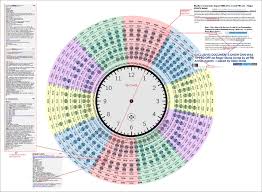
In terms of its answer about Q, Grok is obviously wrong. But it’s wrong in a way that uses a lot of Q jargon, fed to it by the initial user. Grok referenced the “Q clock,” a meme supposedly showing all of the ways that Q drops have later come true, but only because the initial user referenced it first, earlier in the discussion with Grok:

Asked to determine the mathematical probability of a Trump post aligning with Q, Grok finds it. But that’s only because Grok was asked to find it. Grok tells you what you want to hear so you use it more.

Other Grok posts make it clear that Q drops are fake, there is no Trump or military intelligence connection involved in anything Q did, and that the “proofs” don’t prove anything of the sort. One Grok post even references my own work debunking Q proofs in The Storm is Upon Us and elsewhere.

I covered all of this in the book and in other writing. The McCain “death prediction” was a coincidence and not based on Q actually predicting anything. “Tippy top” is a phrase Trump used both before and after an anon asked Q to ask him to use it, and doesn’t mean anything. The Trump tweet/Q drop alignment happened because Trump tweeted a lot and Q was posting a lot, and sometimes they happened around the same time, and never in a way that demanded they be connected.

Q believers know all of this, or at least they’ve been told all of this. And they still demand proof that their movement is based in reality, years after one would think they’d accept it on faith. This is the inherent insecurity of conspiracy belief – needing approval from people you hate, taking on faith things you struggle to believe, and filtering out answers you don’t want to be right even if the same source also tells you things you do want to be right.

So maybe Grok should listen to Grok about QAnon, rather than people who tell Grok that Q is real:

Droning On and On

In 2016, Americans suddenly and somewhat hilariously became terrified of killer clowns. The creepy mirthmakers were spotted in South Carolina luring children into the dark woods, in Green Bay handing out black balloons, skulking around cemeteries in Chicago, randomly knocking on doors, intimidating residents, and approaching young girls in the open. The creepy clowns made their way to the UK, where they intimidated and pulled pranks on people in car parks and streets. One even ran for president.

Four years later, with the world on lockdown, boredom and fear walked hand in hand. That summer, full of tension and dread, people started to notice that every night in big cities, huge numbers of fireworks were going off in the middle of the night. Nerves were rattled and people were frustrated – and scared. Immediately, panic set in that this was a military exercise designed to rob us of our sleep, police activity designed to spur arrests, or even a Trump-ordered test to immunize the population into becoming accustomed to the sound of explosions and artillery.

Cut to 2024, another presidential election year involving Donald Trump. And sure enough, there’s another panic spreading through the plugged-in population over social media: drones. Thousands of drones, all the size of large cars, flying in straight lines and coming out every night (and only at night), hovering over population centers and military bases, and scaring the crap out of us. Is it a false flag to prepare us for alien invasion? A military exercise that Trump will use an excuse for martial law? An attack on American from Iran or China? Proof that nuclear weapons are being trafficked by nefarious forces and the government is desperate to find them? It’s now the Drone Panic of 2024, and it’s spread from news of drones over New Jersey to drones over everywhere.

Taken together, it seems like these three panics prove one of two things: either every presidential election now comes with a deep state engineered panic meant to distract and exhaust us in the face of the oncoming horror, or that Americans are nuts.

Of course, neither of these are the sole explanation. Societal panics are nothing new, and take place all the time fueled by new technology and collective unease. And many Americans, like people of every nationality, are conspiratorial and fueled by fear of what they don’t understand.

In the face of calls for the government to “do something” or “be more transparent” or “shoot them down,” it’s important to realize that what people are pointing out as drones are not actually drones.

They’re airplanes coming in for a landing, stars, planets, satellites, helicopters, optical illusions, deepfakes, hoaxes, and maybe a few commercial drones. They’re the same specks of light that have been in our sky for generations. There might be more of them now, thanks to outfits like Starlink and the revitalizing of commercial aviation post-lockdown. But at any time since the advent of the passenger jet, if you look up at night, you’re going to see something bright and flickering moving across the sky, or maybe appearing to hover, or maybe not moving at all. Isn’t it strange how the “drones” never seem to appear during the day? Or how countless SUV-sized craft are flying around and none have crashed, hit each other, or just stopped working over a busy city? Don’t expect answers from those panicking.

So why did the Great Drone Panic of 2024 happen, and what can we learn from it?

Panics rarely start over things that never happened, they start over isolated incidents that are blown massively out of proportion

In the case of recent past panics, they started with something real that spread over social media because it was equal parts absurd and terrifying. Clowns occasionally go about town in their clown getup, and scare the hell out of people in the process. (Incidentally, if I get a few new Patreon subscribers, I’ll post my own story about being at an event in Los Angeles with a clown that was very much not an event for clowns. It’s wild.) The fireworks panic was the same thing, at first – the nightly fireworks bombardments were real, but there was never any evidence that “the government” or “the cops” were behind them, other than unverifyable social media posts. It turned out that fireworks companies were desperate to unload excess product that wasn’t going to be used for 4th of July shows because of lockdown. No conspiracy required, just one made up to fit the facts.

Drones have become omnipresent, especially in war, but few people know what they really look like

Even just the term “drone” has scary connotations, especially for anyone who watched the Great War on Terror unfold live on cable news every night. It conjures up sinister forces using cryptic orders to fire missiles at weddings, killing you before you even know you’re a target. But drones can be anything – from hobbyist quadcopters to commercial drones delivering packages to lights flying in formation to create a nightly show to military grade missile carriers. Some drones are tiny. Others, like the Shahed 136 drones hammering Ukraine on a nightly basis, are 11 feet long, nearly the length of a compact car. There are over a million of them registered with the FAA, and there’s no doubt that at least a few of the “drones” are actually drones. Because there are so many different types of drones, it’s easy to look at something in the sky and tell ourselves it must be a drone. We don’t have to know what type of drone, or who launched it. It’s a drone. And drones can kill us.

Panic spreads because when we go looking for things, we find them

If you go outside on a cold night with the intention of seeing a drone, you’re probably going to see a drone. Why? Because why would someone go outside to see something and not see it? We like to find the things we’re looking for, and to not be disappointed. We want to be able to tell our friends and social media followers that we saw a drone, not that we saw a plane or a star. Ultimately, “I saw something” is a more compelling – and potentially viral – story than “I didn’t see anything.” That’s boring.

It’s a weird time where not much is happening

Americans have been on a relentless run of breaking news for years, and maybe no year more than 2024. We had stretches where absolutely insane and game-changing things were happening every day, and with Trump’s election, that seems to have calmed down. Yes, his cabinet nominations and goofy lawsuits are news, but they don’t the heady high-wire thrill of assassination attempts or last minute candidate changes. People are a little bit bored at the moment, and when people get bored, conspiracy panics start. When we lack danger and thrill in our lives, we find ways to make them up.

A lack of basic understanding about physics makes us turn the ordinary into the extraordinary

If you’ve ever driven across Los Angeles at night going north from LAX, you’ve seen a line of what look like floating blobs of light just hanging in the air. And because you’re at one of the busiest airports on the planet, you know they’re planes coming in to land, and not UFOs or drones or whatever. But if you’ve never lived near a major airport or flown into a big city at night, you might not be familiar with why descending airplanes look like they’re floating. So when you see it for the first time, your mind assigns meaning and danger to it. For the record, there’s a name for why descending airplanes appear to be floating. It’s an optical illusion called the parallax effect, It’s a difference in how the brain perceives rates of motion when moving, which is why closeup objects look to be moving quickly, while faraway ones look to be moving slowly or stuck. Parallax is a critical depth perception tool, not a deep state conspiracy. It’s basic physics – but a lot less entertaining and alluring than the unevidenced alternatives.

The “I know what I saw” fallacy

So many of the claims of drone sightings ultimately fall into some version of “I saw three lights in the sky forming a triangle. Triangles in the sky are UFOs. Therefore, I saw a UFO. And I know what I saw.” We aren’t interested in other explanations, such as the three lights being the lights on the wings and nose of a plane. We know what we saw. Except most of the time we don’t know what we saw, only that we saw something, and decided we knew what it was. Our brains have a remarkable ability to create stories out of things that didn’t happen, or that we only saw a glimpse of and filled in the rest. Maybe the best example of this is the numerous witnesses to TWA Flight 800 exploding who claimed they saw and then immediately heard a missile hit the plane, despite the laws of physics making this impossible. The people who told the FBI this weren’t lying, they were just convinced they saw something that they could not have experienced. And the more you tell them they’re wrong, the more they believe they’re being called a liar.

We’re just really into conspiracy theories right now

This might be the simplest explanation of them all for why drone panic hit so hard and so fast. Americans, just like all humans, are innately prone to pattern-seeking and making meaning out of randomness. But 2024 has seen the continuation of conspiracism and paranoia creeping into our everyday lives in a way that was never even possible just a few decades ago. Our political leaders and cultural titans spread disinformation the way a knife spreads butter. Even Donald Trump has stoked the drone panic, claiming without any evidence that the government “knows what they are” and telling his followers to shoot them down. Other influencers have claimed, also without evidence, that the drones are part of a desperate attempt to find a nuclear warhead, or a Russian disinfo op, or a secret coup plot. This used to be the stuff of rambling drunks at bars and your weird uncle at Thanksgiving. But it’s everyone now, and it’s everywhere we look. And that now includes the sky at night, once a place of awe and wonder, but now cluttered up with planes and satellites and ever-present low light blotting out the glory of the stars.

So what can we do to abate drone panic? Like all pushback against conspiracy theories, think micro and not macro. Stop sharing random videos that “saw a drone” flying somewhere, because absent other evidence, it’s not a drone. If you go looking for drones, expect not to find them. If you see a blob of light floating in the air, think about airports near you, not motherships and aliens. Get familiar with the stars and planets at night in your area, so you know what they are and are not. They’re pretty cool to look at.

And disabuse yourself of the notion that you are a player in a secret nighttime war between good and evil, being played out through drone swarms and viral panic. Take the opportunity to become acquainted with something bigger than your own life – in this case, the very cosmos that made us. It’s a hell of a lot more breathtaking than panicking over nothing.